Experiencing Freedom in Jesus – Embrace Your New Identity
This series considers how Christians can enjoy the freedom of the Christian life that comes through Jesus Christ. In this lesson in particular, we discover how believers can experience freedom by embracing their new identity in Christ.
Experiencing Freedom in Jesus – Embrace Your New Identity
It’s freeing to know who you are and to have a real sense of self. In fact, it’s not a stretch to say that freedom has its foundation in identity—when we know who we are, particularly who we are in relation to God, life makes sense.
Conversely, when we don’t know who we are, or have no understanding of what constitutes a proper relationship to God, life makes little if any sense at all.
Ultimately, in the absence of an identity firmly rooted and grounded in Jesus, mankind can only face an onslaught of troubling confusion when it comes to purpose, identity and meaning.
“Who God says we are matters far more than who we think we are.”
For example, in our natural state without God we often define our identity by how we feel. “I feel a certain way, so I am a certain way.”
Other times things define who we are, such as power and prestige. “I’m a man of influence!” Or what about defining ourselves by our work or even defining ourselves by who we associate with? “I’m an influencer…I’m somebody.”
While our vocation, social circle, hobbies and so on do have roles to play when it comes to our identity, none of them are constant, meaningful or important enough to fully let alone adequately define us.
Only God, who is I Am (Ex. 3:14), our creator and sustainer, can tell us who we are. In fact, who God says we are matters far more than who we think we are, and that’s true whether we like it or not. Adam and Eve didn’t like it, and we’ve been paying the price ever since (that should tell us something).
While looking to God for our identity might sound restrictive, it’s actually the gateway to freedom. Before I was a Christian I wanted nothing to do with God. I wanted things my way, but I realized that my way is limited, and that I needed a savior to show me the way because I was never going to be good enough on my own merits to save myself from my sins, let alone make it into heaven.
In the end, my identity before Jesus was a mess, it made no sense at all. And this is how it is for everyone before they are saved because man’s ways of defining identity constantly fluctuate; they’re momentary, fleeting, inconsistent and lack substance.
We chase trends, fads and we settle for instability over permanence. We either try to keep up with our ever shifting and not always 100% factual emotions, our own perfectionist tendencies or the expectations of those around us. The result? Exhaustion, apathy and confusion.
In the end, man’s definitions of himself don’t provide lasting satisfaction nor do they fulfill our deep longing to be fully known.
“Man’s definitions of himself don’t provide lasting satisfaction nor do they fulfill our deep longing to be fully known.”
Finding true identity, however, and experiencing the profound freedom that comes from knowing who we really are can only come by way of Jesus Christ and through his saving work on the cross for sinners.
When you embrace who God says you are (a sinner in need of his saving grace), you discover that what at first appears restrictive is actually a burden that is easy and light from the God who gives us richly all things to enjoy (Matt. 11:28-30, 1 Tim. 6:17).
Also, God’s authority that commands reverence protects us, for God truly and fully knows us more than we even know ourselves and his ways are right, good and eternal (Prov. 21:2, Ps. 119:160).
Is it any wonder then that an identity grounded in Christ provides untold riches of peace, joy and clarity in our lives? When we know who we are according to God, we are free to finally be who he wants us to be.
So what does it mean for a Christian (someone who has placed their faith and trust in Jesus as their savior from their sins) to embrace his or her new identity in Christ? The rest of this lesson will look at just that: what it means to experience freedom through an identity rooted in Christ. Let’s jump in!
The Christian’s New Identity in Christ
Those who believe in Jesus as their savior are given a new identity. The Bible describes this as the “new man,” who is washed in the regeneration and renewing of the Holy Spirit (Titus 3:5), and cleansed from sin (Ps. 51:7, 1 Jn. 1:9, Eph. 5:26-27) as a new creation in whom “all things are become new” (2 Cor. 5:17).
This new man is “renewed in knowledge after the image of him that created him” (Col. 3:10), that is he understands who God is and who he is as God’s created creature. For the rest of his life the new man will continue to grow in dependence and faith in God, learning more and more what it means to be created in God’s image.
“Those who believe in Jesus as their savior are given a new identity.”
The new man also knows he is now in a right standing with his creator and restored to a right relationship with God (Rom. 5:10) through reconciliation by way of Jesus. This enables true and lasting change in his life from the work of the Holy Spirit.
Additionally, if you believe in Jesus as your savior then you are spiritually “born again” (Jn. 3:3-6). Your old self is dead, you are now alive to Christ (Rom. 6:6-7) and dead to sin (Rom. 6:11). Also, you are seen as righteous in God’s sight (1 Pet. 2:9) because you are clothed in Jesus’ righteousness (Rev. 3:5, Phil. 3:9, Col. 1:22). These are some of the many gifts of grace bestowed upon believers by Jesus.
As such, those who have always tried to be “good enough” or who wonder “have I done enough?” can find rest and freedom by knowing that because of Jesus, they don’t need to strive to measure up anymore. Also, those who have been slaves to sin (all of us) are now freed from sin’s dominion over us (Rom. 6:14).
Moreover, if you have believed in and trusted Jesus Christ as your savior then you are an adopted child of God (Jn. 1:12) – a member of God’s family and his “bride” the church universal (Eph. 5:27-29).
Lastly, all believers are part of a chosen generation, are members of God’s royal priesthood (1 Pet. 2:9) and are ambassadors of God sent out to accomplish good works that he has already planned for them to accomplish (2 Cor. 5:20, Eph. 2:10).
The believer’s new identity then is a new start, in a new family with a new purpose. It changes everything!
Embrace…Freedom
Our new identity in Christ, while a free gift to those who choose to accept Jesus as their savior, requires our cooperation with God’s working in us. This includes our denial of who we say we are, and acceptance of who God says we are.
Saying bye to self and yes to God marks the beginning of God’s process of making believers more like Jesus. It’s what living out the reality of our identity in Christ entails.
To clarify, only God can save us and only God keeps all of his children saved until heaven. However, we still have a role to play. We must not “grieve” or distress the Holy Spirit (Eph. 4:30). Rather, we are to walk in the Spirit and in newness of life along the new and living way (Heb. 10:19-20).
“For the Christian, to live is Christ!. Our vitality, hope, existence, all aspects of our new life and life itself revolve completely around Jesus. Embracing our new identity means embracing Christ!”
For the Christian, to live is Christ! (Phil. 1:21). Our vitality, hope, existence, all aspects of our new life and life itself revolve completely around Jesus. Embracing our new identity means embracing Christ!
It also means learning from him by saturating our lives with his word (the Bible). Through it we learn who he is, what it means to be a Christian and principles of Godly living and behavior (2 Tim. 3:16-17). We can also learn by listening to Godly mentors and being in a Bible-believing church (Gal. 6:2, Heb. 10:25).
In all of this it’s important to understand that becoming like Christ takes time. It’s a process, it’s called sanctification and Christians spend the rest of their earthly lives working out the ramifications of our salvation and new identity (Phil. 2:12). We will do this until we are complete and entire, wanting nothing, and when we see Jesus as he is in heaven and enter into the place prepared for those who love him (Jas. 1:4, 1 Cor. 2:9).
Until that day however, we will learn, grow and experience God’s plan for our lives. His plan isn’t always straight, it’s rarely simple and it happens on his timeline, not ours.
This is why Jesus commands believers to learn from him (Matt. 11:29), and to walk in the Spirit (Gal. 5:16). Additionally, believers are not to let sin reign in their bodies but are to prove what is right and put an end to sinful living with God’s help (Rom. 6:12-14, Rom. 12:2, Col. 3:5).
“Being ‘in Christ’ redefines (or rather rightly defines) our purpose in life, our personal conduct, our relationships with others, and how we measure success, growth, and progress in life.”
This also includes having a renewed mind that thinks on Godly things, an attitude that puts others before self, and character that lives unto righteousness (Phil. 4:8, 1 Pet. 2:24).
Moreover, it means taking up our own cross (leaning into the challenges of being more like Christ), following Jesus (Matt. 10:38), storing up treasures in heaven (striving for things of eternal significance) and having our hearts in the right place (Matt. 6:20-21) by loving what God loves – namely him and others (Matt. 22:37-39).
Ultimately, being “in Christ” (2 Cor. 5:17) redefines (or rather rightly defines) our purpose in life (serve, obey and please God – 1 Chron. 29:17, Ps. 147:11, Col. 1:10, 1 Jn. 3:22), our personal conduct (bearing spiritual fruit – Col. 1:10), our relationships with others (the church) and how we measure success, growth and progress in life (becoming more like Christ).
Knowing who we are, how we’re meant to act and where our life is going…God gives us answers to all of those things when we embrace our new identity in him. Therefore, being in Christ frees us from the unknown, and grounds us in reality and truth.
One Step at a Time
These aspects of our new identity exemplify what it means to be a new man in Christ who walks in newness of life (Rom. 6:4). We please God, bear fruit, and love others.
They are lofty goals, and high standards, yet while Jesus demands something of us we can all rest assured that God will bring his plan in our lives to completion (Phil. 1:6), that all things work together for good to them that love God (Rom. 8:28), and that he is in control. Also, God’s strength is perfect in our weakness (2 Cor. 12:9) and his grace is sufficient for us.
“The saved rest comfortably because they listen to who God says they are.”
Moreover, all the commands of God are light and easy when we rest safely in who he says we are – when we embrace being his for all eternity! (Matt. 11:30)
As such, the saved rest comfortably because they listen to who God says they are. As his sheep, we hear the Shepherd’s voice, and we follow him (Jn. 10:27-28).
Moreover, God’s ways are unchanging, his plans always good, and his design for mankind perfect (Ps. 18:30). This means that his plans for us (even when we can’t understand them, even when they are difficult and we suffer) are right.
And yes Christian, you will stumble…often! Satan and the world will speak lies into your life that make you doubt who you are in Christ (1 Pet. 5:8). The residual effects of sin might sometimes drag you down (1 Jn. 2:16). Your timeline and sense of progress won’t be the same as God’s.
Nevertheless, despite times of doubt, confusion and suffering, they are momentary (2 Cor. 4:17), should be expected, are never a surprise to God and are being used by him for our good (Rom. 8:28). Our trials are earning us rewards in heaven as well!
That’s why resting in our new identity in Christ is the foundation to personal and spiritual growth. We will have troubles, Jesus did and so will we, and this world isn’t heaven (Jn. 16:33), but through Christ we are more than conquerors (Rom. 8:37).
“A life defined by who God says you are is the best life there can be and the only life that really matters. It brings true freedom, purpose, and meaning to life.”
Still, you must remember, God is working always to make you more like Jesus (1 Cor. 1:8) and you are his purchased possession and you have been bought with a price (1 Cor. 6:20).
God will never leave you or forsake you (Heb. 13:5), you are under no condemnation (Rom. 8:1), and he is always ready to forgive with new mercies every morning (1 Jn. 1:9, Lam. 3:22-23). God’s words last forever, God has declared you to be his child, as such yours is an eternal identity.
God’s love overcomes our struggles and stumbling, and brings freedom to our new life in him.
Therefore, take it one step at a time with the savior as you step heavenward. Don’t get discouraged. Embrace your new identity in Christ and be free!
Conclusion
No matter where a person looks to find his identity…apart from Christ the identities that we ascribe to ourselves or that the world offers are merely counterfeits.
However, an identity rooter in Christ grounds us in reality and truth. In fact, Christians see the world and themselves for what they really are and can live consistent moral lives because of that.
Moreover, a life defined by who God says you are is the best life there can be and the only life that really matters. It brings true freedom, purpose, and meaning to life.
Perhaps the Psalmist says it best in Psalm 16:11… “You will show me the path of life: in your presence is fulness of joy; at thy right hand there are pleasures for evermore.”
May you experience true freedom in Jesus, Amen!

J.R. Waller, MBA is a Christian lay-teacher, author, and Founder of Every Reason to Believe. He holds an MBA from Rollins College, B.S. in Psychology from The University of Central Florida, Certificate in Christian Apologetics from Biola University, and Bible Knowledge Certificate from The Master’s Seminary Institute for Church Leadership. He is also a two-time Fellow (UCF, The James Madison Institute).
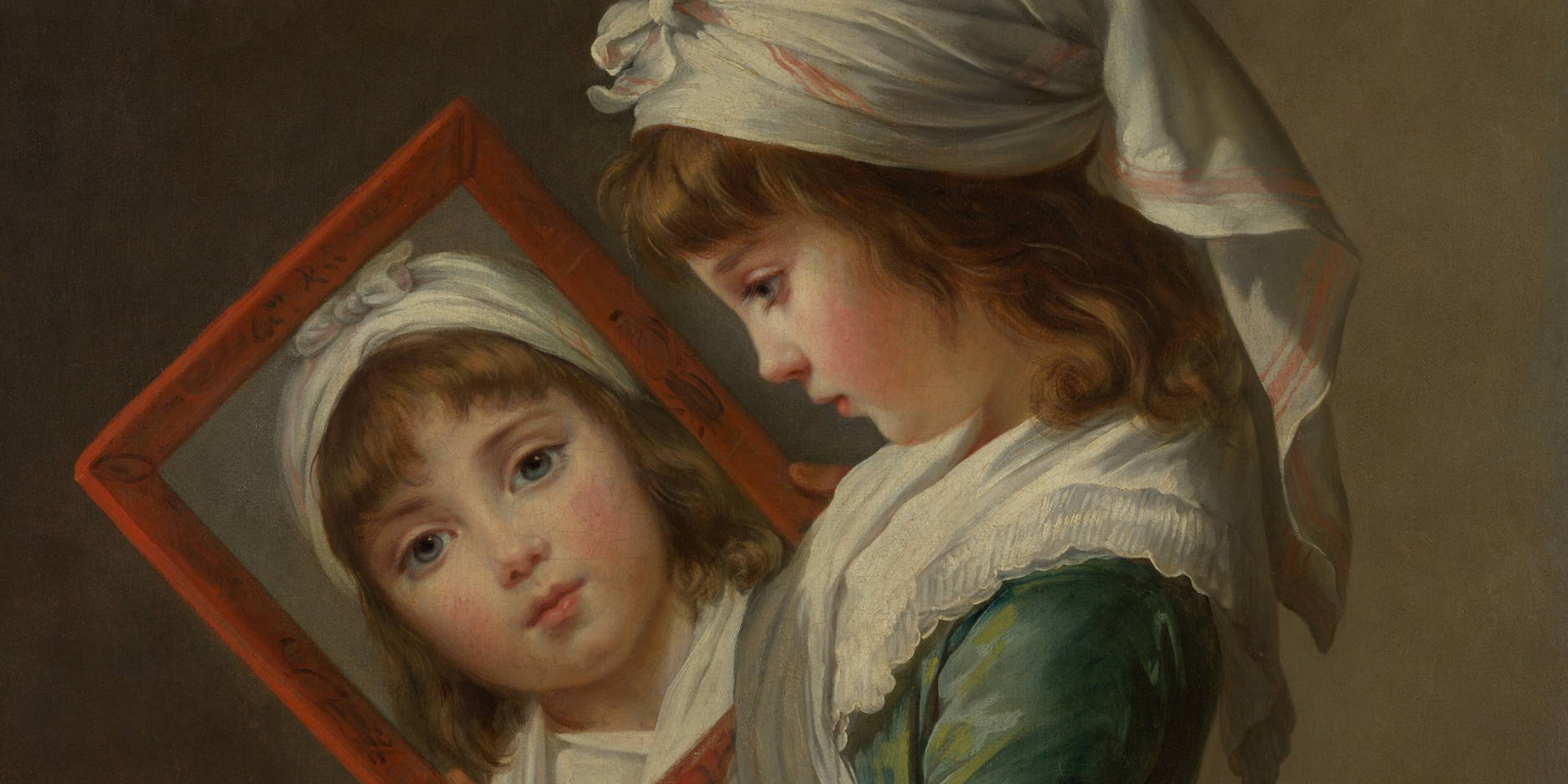
Image Credit: Julie Le Brun (1780–1819) Looking in a Mirror by Elisabeth Louise Vigée Le Brun (French, 1787). The Metropolitan Museum of Art, New York.
Thank you for reading this article about your identity in Christ!