Are Ethics and Morals the Same Thing?
Are Ethics and Morals the Same Thing?
Although the term ethics is often used interchangeably with morals or morality, historically the two have had very different meanings.
Ethics (from the Greek ethos) conveyed the sense of a dwelling place, a place of stability and permanence.
Morality (from the word mores) describes the behavioral pattern of a given society.
“Although the term ethics is often used interchangeably with morals or morality, historically the two have had very different meanings.”
Ethics is a normative science in that it prescribes what should be. Morality is a descriptive science in that it indicates what is. Ethics are absolute while morals are relative.
Consequently, when morality and ethics are used interchangeably, as we do in today’s post-modern society, the normal (what is) becomes the normative (what should be).
Good is determined by the normal or the statistical average. There is an obvious fault in making a “what is” into a “what should be.”
“Ethics is a normative science in that it prescribes what should be. Morality is a descriptive science in that it indicates what is.”
For believers, this means being called to non-conformity (with regard to many of the “accepted morals” in our society), to a transforming ethic that shatters the normal, that shatters the “what is.” Biblical ethics is obedience to God.
Conformity to a given society’s self-established norm then becomes the ethical obligation instead of conformity to externally imposed imperatives by a Sovereign God.
What About War, Is War Ethical?
There are three possible positions an individual may take regarding war; these are activism, pacifism or select-ism.
Activism views all wars as permissible. Pacifism views all wars, and hence ones involvement in them, as wrong. Select-ism views war as wrong, but one’s involvement in a war may be justifiable.
It is from this third position that the “just war” theory has emerged in Christian history.
Select-ism argues that the victim nation of a clear-cut act of aggression has the right of self-defense.
Francis Hopkinson (a signer of the Declaration of Independence) defined war, in his “A Political Catechism” written in 1777, as the curse of mankind, the foundation of which “is laid in the wickedness of mankind.”
He divided war into offensive and defensive wars and stated that a defensive war was not only justifiable but an indispensable duty.
“Otherwise,” Hopkinson said, “a few miscreants (unprincipled individuals) would tyrannize over the rest of mankind and make the passive multitude the slaves of their power.”

Paul Tambrino, PhD, EdD is President Emeritus of the Iowa Valley Community College District, and former Academic Vice President of Warren County Community College. He has also taught accounting and theology at several colleges and seminaries, writes a weekly newspaper column, and is the author of Ask Augustine and Mariology: Past, Present and Future. He holds a Doctor of Philosophy in Theology from Trinity Seminary, and a Doctor of Education from Temple University. Paul was awarded the honorary rank of a three-star general at the US Air War College, Air War University-class of 1997 and he is a Paul Harris Fellow in Rotary International.
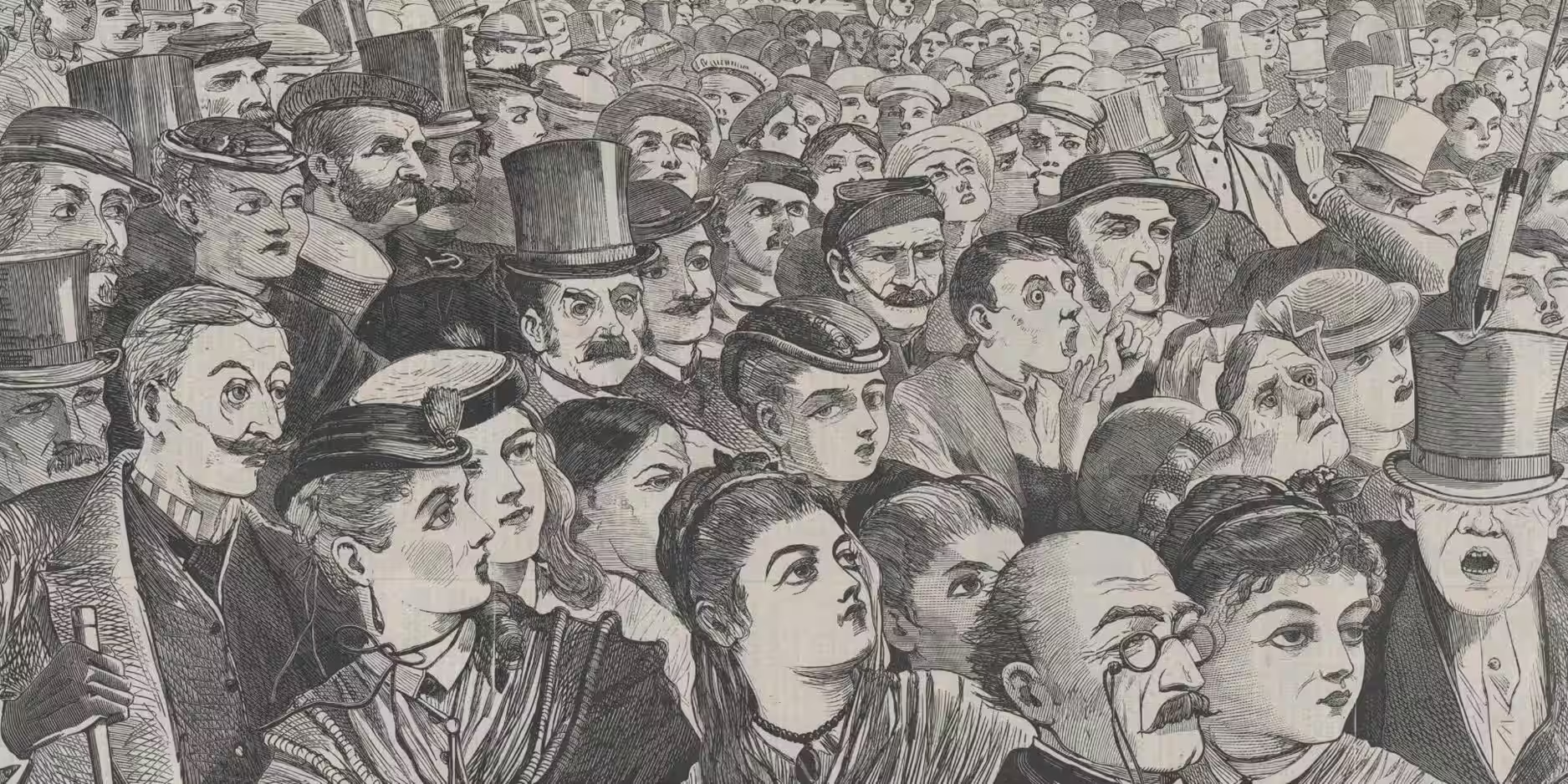
Image Credit: Fire-Works on the Night of the Fourth of July (from “Harper’s Weekly,” Vol. XII), After Winslow Homer American, Publisher Harper’s Weekly American, Publisher Harper & Brothers American, July 11, 1868. The Metropolitan Museum of Art, New York. 38.43.
Thank you for reading this article about the difference between ethics and morals. To read more articles like this one about the difference between ethics and morals visit our Topics page.