Ask the Pastor: Two Questions About the Cup Jesus Drank
Ask the Pastor is a regular column at Every Reason to Believe where pastor Reagan Marsh answers a variety of reader questions about ministry, Christianity, the church, and more…all from the perspective of the pulpit. You can find all of his articles here.
Two Questions About the Cup Jesus Drank
41) And he was withdrawn from them about a stone’s cast, and kneeled down, and prayed, 42) Saying, Father, if thou be willing, remove this cup from me: nevertheless not my will, but thine, be done. 43) And there appeared an angel unto him from heaven, strengthening him.
-Luke 22:41-43 (KJV)
Q. When Jesus said, “Take this cup from me,” what was in the cup? The wrath of God?
This is an interesting and reflective question. The cup is figurative language describing the outpouring of God’s wrath on Christ as our substitute in his propitiation for our sins and expiation of our sins.
Jesus describes it in various ways: as a baptism (Lk. 12:50), a trial (Matt. 26:38), etc., but all speaking to the specific suffering he’d undergo for us and our salvation.
“A cup of wrath for him—a cup of redemption and eternal fellowship for us. By his wounds, we are healed, and saved to the uttermost. Amazing love!”
It’s closely tied to the psalmist “lifting up the cup of salvation and calling on the name of the Lord” (Ps. 116:13).
He can drink and call upon the Lord, because the Lord drinking it for him purchased that grace of peace, access, and enjoyment of God for him.
It ultimately points us to the cup we’ll drink with Jesus at the marriage feast of the Lamb one day in the age to come (Matt. 26:29).
A cup of wrath for him—a cup of redemption and eternal fellowship for us. By his wounds, we are healed, and saved to the uttermost. Amazing love!
Q. He asked though if possible for it to be taken from him. Was that because of the separation, or the wrath is specific (meaning something else)?
Well…the answer is “yes.” It’s “both-and.” We must not divide the two natures of Christ, as they’re met in his one Person; but Scripture does recognize distinctions between the two natures. Thus we confess there is no co-mingling of the two natures. Jesus is truly God and truly man, “in one Person, forever.”(1)
“His forsakenness is specifically in his humanity, for us.”
For example, in his humanity, he can be conceived, mature physically, learn about the world he created, learn obedience, not know some things (Matt. 24:36), suffer, weep, mourn, desire, be tempted, engage in spiritual warfare, exercise faith, and die (Lk. 2:52; Heb. 5:8, etc.)
In his deity, he is eternally the Son, immutable, impeccable, impassible, omniscient, omnipotent, omnipresent, the Lamb slain from the foundation of the world. He endured the Cross for the joy set before him, the inheritance (Is. 53) of his chosen brethren, by his purchase.
What’s the point? We have here an instance where the Gospel writers are highlighting Christ’s true humanity.
In his deity, he cannot suffer or fear. In his humanity he can be deeply distressed, know the Father’s displeasure (“my God, my God, why have you forsaken me?”), and plead for the suffering to pass from him.
Christ was asking, as an evidence to us of his humanity and our guilt and separation from God by sin, so that we might see that he’s truly made like his brothers in every way.
He asks because of the agony he’ll endure for his people. His suffering is specific, and specifically in his humanity (“he himself bore our sins in his body on the tree,” 1 Pet. 2:24), for us and our salvation.
His forsakenness is specifically in his humanity (the Trinity cannot be broken, or else God would be less than God and undergo change), for us.
It’s a great question, and a big question, which brings theology proper (Trinitarian study), Christology, anthropology, and soteriology all to intersect.

Reagan Marsh, MATS, MDiv (eq.) is founding pastor-teacher to Reformation Baptist Church of Dalton, GA. A certified biblical counselor, Reagan took MATS and MDiv study at NOBTS and SBTS, and is a ThM candidate at CBTS researching Hercules Collins’s pastoral theology under Tom Nettles. He has served in gospel ministry since 1998 and he writes and contributes to numerous Christian publications.
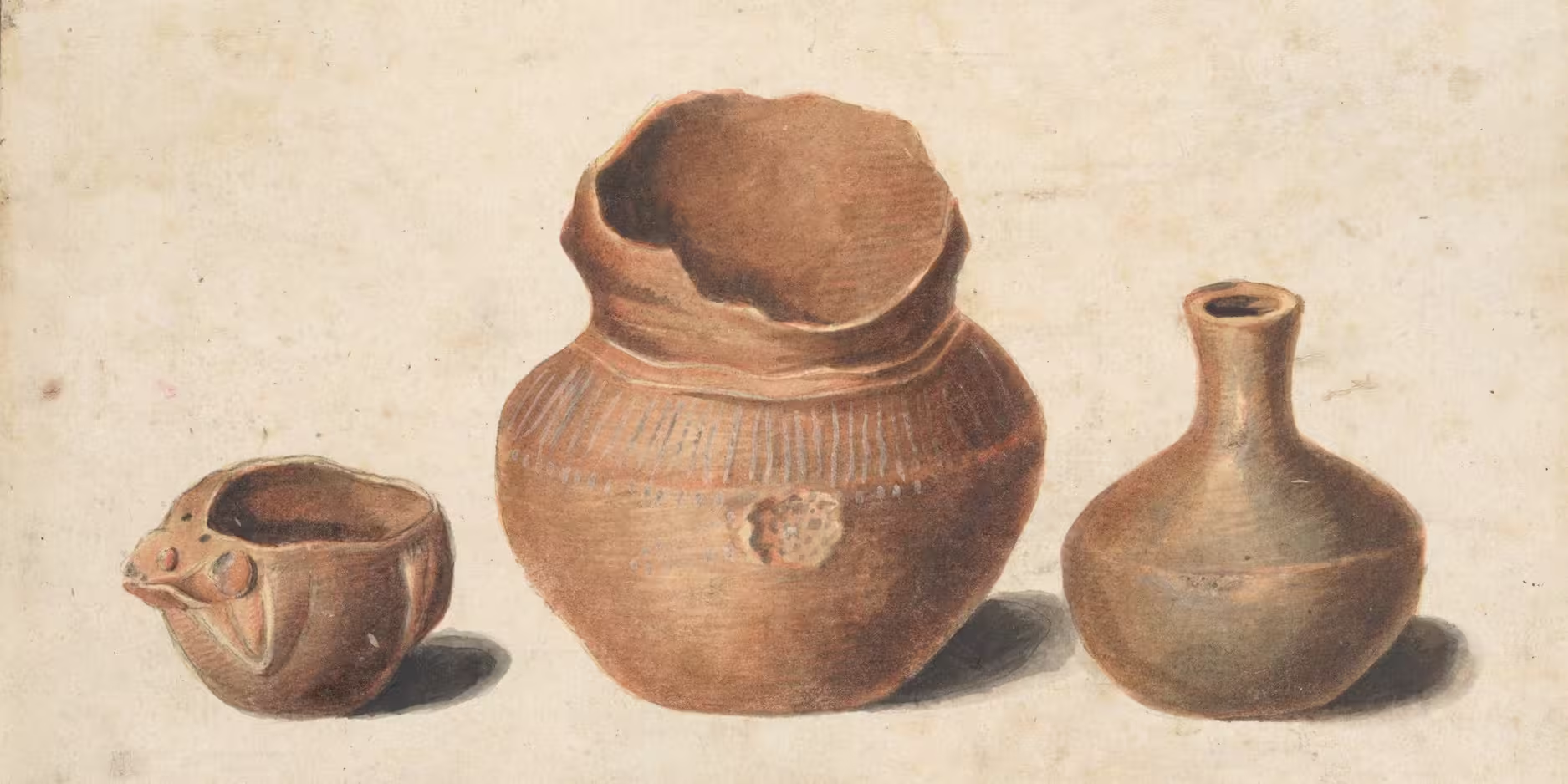
Image Credit: Indian Antiquities (Copy after Engraving in American Medical and Philosophical Register, 1812) by Pavel Petrovich Svinin (Russian) and Alexander Anderson (American), 1812–ca. 1813. The Metropolitan Museum of Art, New York. 42.95.32.
Sources: (1) William Collins and Benjamin Keach, The Baptist Catechism, Q. 26.
Thank you for reading this article about the Cup of Wrath. To read more articles like this one about the Cup of Wrath visit our Topics page.