Ask the Pastor: Are There Rewards in Heaven?
Ask the Pastor is a regular column at Every Reason to Believe where pastor Reagan Marsh answers a variety of reader questions about ministry, Christianity, the church, and more… all from the perspective of the pulpit. You can find all of his articles here.
Introduction
I believe it to be biblical that there will be rewards in heaven.
For example, see Matthew 5:12; Matthew 25:21-29; Mark 10:29-30; 1 Corinthians 3:8, 14; 1 Corinthians 9:16-25; 2 Corinthians 5:10; and Revelation 22:12 to begin getting a sense of how the Bible sketches this matter.
What Rewards Are Not:
They’re not salvific or redemptively meritorious, but visible fruits of sanctification and the result of obedience to Scripture.
They’re not the motivating factor for the saint’s godliness or usefulness—God’s glory is—though they’re properly a motivating factor. See here Isaiah 26:12; Ephesians 2:10; and Philippians 2:13.
What They Are:
Scripture does seem to present something of a “tiered” system of rewards.
I hesitate to use that description, but I struggle to find a more suitable word. It’s much easier to explain what rewards are not, than what they are.
“God is the saint’s greatest, chief, sweetest, best reward.”
But a defining category of this discussion, which often seems to be overlooked in engaging this question, is seen in the Lord telling Abraham: “I am your exceeding great reward” (Gen. 15:1).
God is the saint’s greatest, chief, sweetest, best reward.
Eternal life with God through Jesus Christ, beholding his face, enjoying him in a body suited to be before him and serve him as we long to do, forever—that’s the Christian’s ultimate reward, whatever the “crowns” or being set as “master over much” actually works out to mean.
We’ll have God in Christ. We’ll see Jesus as he is, with eyes unhindered by our sin. We’ll know the fellowship of his Spirit and the wonders of untainted communion with God.
Truly, “eye has not seen, ear has not heard, nor has it entered into the heart of men what God has prepared for those who love him” (1 Cor. 2:9).
What God has prepared for his beloved children will be enough, more than enough; our souls will be satisfied with seeing his likeness on that great Day (Ps. 17:15).
“Eternal life with God through Jesus Christ, beholding his face, enjoying him in a body suited to be before him and serve him as we long to do, forever—that’s the Christian’s ultimate reward, whatever the “crowns” or being set as “master over much” actually works out to mean.”
So: I do think Scripture teaches something of a rewards “system” for the Christian’s good works, but I’m not convinced it functions like a salesman’s commission scale!
In the economy of God, these works were accomplished by means of God’s Spirit working in his people by his decree, under his providence, through the believer’s agency.
The Bible presents this as a legitimate and sufficient motivation for both godliness and suffering (James 1:12; 2 Timothy 4:8); but as with much pertaining to eschatology, Scripture leaves these details and particulars largely undefined.
Do note that suffering and persecution, while often seen popularly as evidences of God’s displeasure, are biblically something of a precursor of the saint’s reward (2 Corinthians 4:16-17; Matthew 5:10-12).
That’s simply not how we think, and we have much need of God’s help here in order to serve him and to receive from him.
Conclusion
What a friend we have in Jesus, who buys us by his blood, walks with us by his grace, serves us by his Spirit, teaches us by his Word, and then rewards us and counts our labors precious by his unspeakable mercy (Hebrews 6:10).

Reagan Marsh, MATS, MDiv (eq.) is founding pastor-teacher to Reformation Baptist Church of Dalton, GA. A certified biblical counselor, Reagan took MATS and MDiv study at NOBTS and SBTS, and is a ThM candidate at CBTS researching Hercules Collins’s pastoral theology under Tom Nettles. He has served in gospel ministry since 1998 and he writes and contributes to numerous Christian publications.
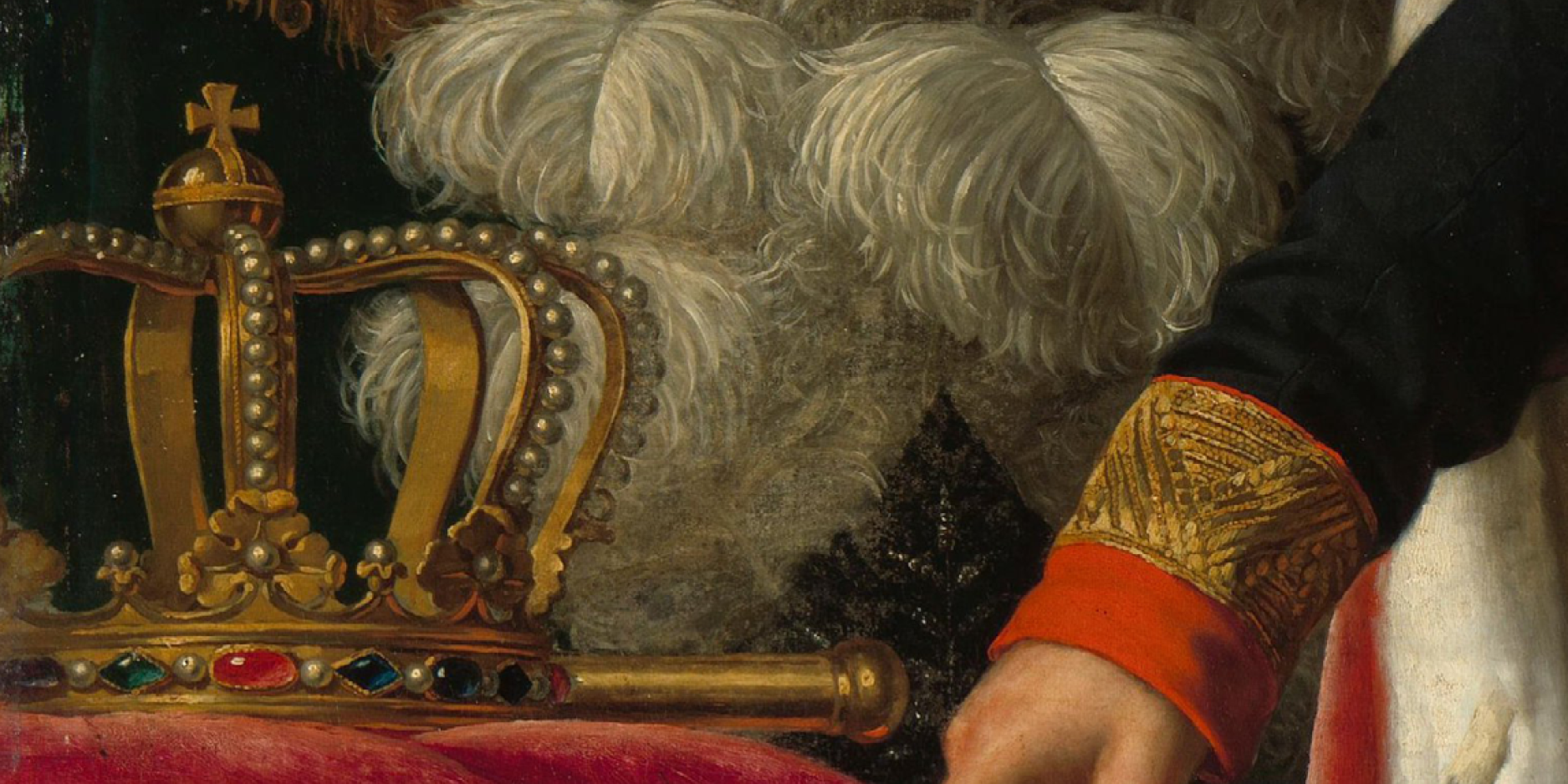
Image Credit: Portrait of William I, King of the Netherlands (1819) by Joseph Paelinck. The Rijksmuseum. SK-C-1460.