Ask the Pastor: Which Current Translations of the Bible Are Valid and Trustworthy?
Ask the Pastor is a regular column at Every Reason to Believe where pastor Reagan Marsh answers a variety of reader questions about ministry, Christianity, the church, and more… all from the perspective of the pulpit. You can find all of his articles here.
This is a timely and practical question. Dealing with Bible translations can get very complicated, very quickly—so I’ll be brief and deal in summary, not in great specifics.
There are different textual bases for the translations in the KJV/NKJV/Geneva/Tyndale family, and the others in what’s called the “Critical Text” family.
Once you decide which family of translations you plan to use primarily, you move into the translation philosophy.
I want to have both families of translations on my shelf; for me, it’s a question of which wing of the plane I like better!
Moving into translation philosophy, you have a few options: paraphrase, dynamic equivalent, and formal equivalent.
“I want to have both families of translations on my shelf; for me, it’s a question of which wing of the plane I like better!”
Paraphrases are based on English Bibles, not the original language. They essentially re-word the Scriptures from English…into English.
Examples of a paraphrase would be The Word on the Street, The Living Bible, or The Message.
Dynamic equivalents are actual translations, and are usually about 80% literal and 20% “dynamic”—meaning that they focus on the basic idea behind a phrase (such as an idiom or hyperbole) instead of translating the phrase in a literal, word-for-word fashion.
Some examples are the NLT, NIV, Phillips, or NCV. They are very helpful for the Psalms and OT historical books.
The concern in dynamic equivalency is losing precise thoughts and verbiage from the original language; the translators have to make interpretive decisions for you.
For example, compare 1 Timothy 3:11 in the NIV with the ESV or NASB. I write this as one whose primary preaching/study Bible for years was the NIV: I appreciate many things about the NIV, but get a literal translation.
Formal equivalents are more literal translations, though idioms and hyperbole are generally translated as such, or are footnoted.
The idea is that Scripture’s specific words are inspired by God, not merely the thoughts, principles, or bare “truths” of Scripture. As such, the specific words are of primary importance.
The formal equivalence approach: “Here’s what it says, go read and study on your own to learn what it means.”
Examples of formal equivalence translations are NASB, ESV, KJV, NKJV, Geneva, CSB, and NET.
“My personal ‘Big 4’ are the NASB, ESV, NIV, and KJV. I consult the original languages weekly as far as I have time and ability. I will not preach or teach without having studied a text from at least these 4 translations.”
My personal “Big 4” are the NASB, ESV, NIV, and KJV. I consult the original languages weekly as far as I have time and ability. I will not preach or teach without having studied a text from at least these 4 translations (though I have around 50 English translations in my library).
Are there translations to ignore? Absolutely. Antichrist has his workers in many false churches. Many are cultic, non-credible, or have a theological agenda driving their production.
The Roman Catholic New American Bible includes the Apocrypha (for a total of 46 books) and is translated from the Latin Vulgate, not from the biblical Greek and Hebrew texts.
Eastern Orthodoxy often incorporates a version of the NKJV alongside the Apocrypha and other deuterocanonical books (53 books total); it should be avoided.
The New World Translation—which is not actually a translation—belongs to the Jehovah’s Witness cult; likewise, the Mormons alter their KJV to suit their false teachings.
Of Protestant Bibles, the Revised Standard Version (RSV), New Revised Standard Version (NRSV), and Today’s New International Version (TNIV) are liberal and often are referred to as “gender-neutral” Bibles.
The Passion Translation is similarly revisionist and driven by an agenda.
Paraphrases can be useful at times for getting a “sense” of a text, though they are not suited for serious study or any sort of teaching.

Reagan Marsh, MATS, MDiv (eq.) is founding pastor-teacher to Reformation Baptist Church of Dalton, GA. A certified biblical counselor, Reagan took MATS and MDiv study at NOBTS and SBTS, and is a ThM candidate at CBTS researching Hercules Collins’s pastoral theology under Tom Nettles. He has served in gospel ministry since 1998 and he writes and contributes to numerous Christian publications.
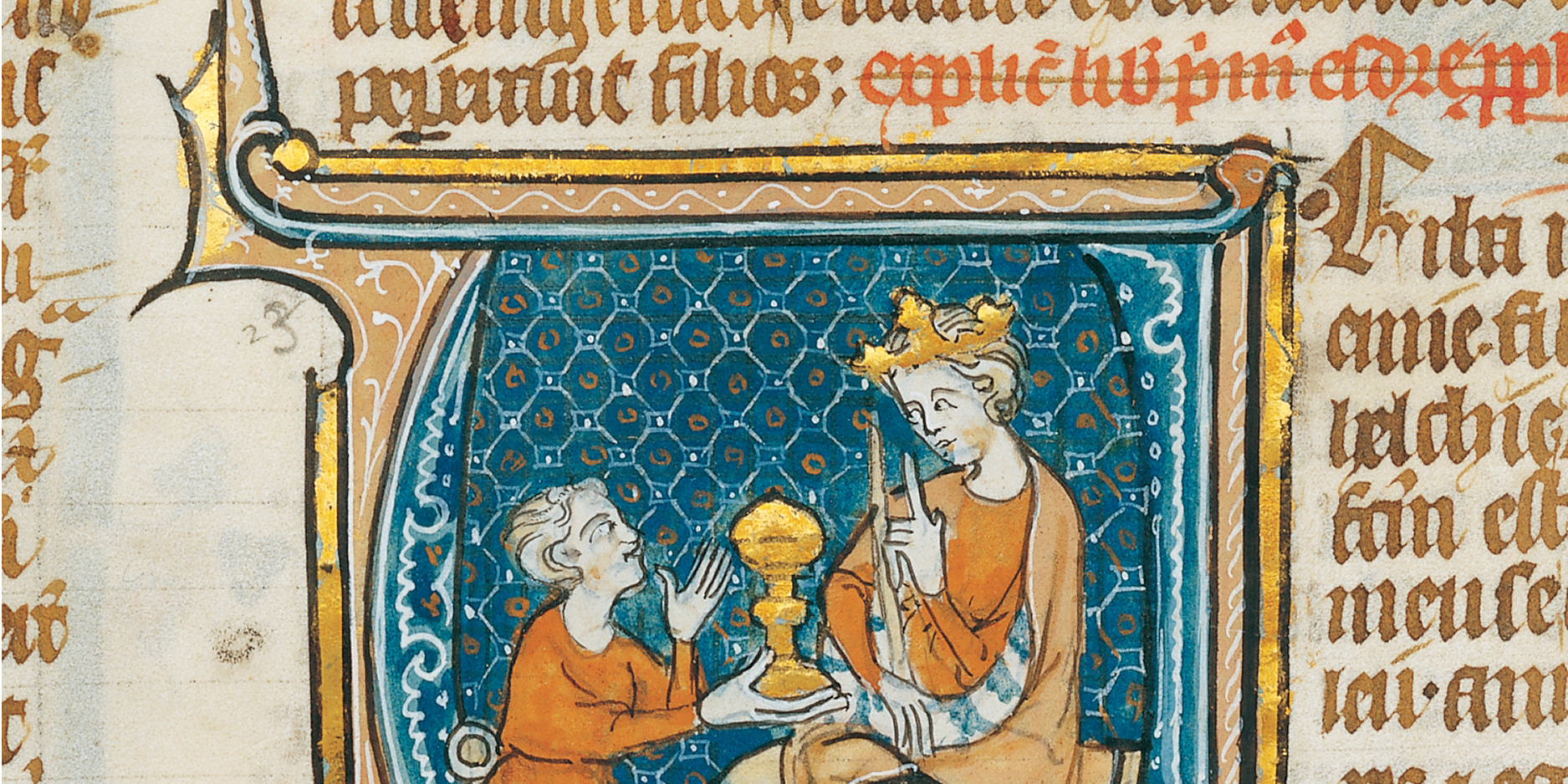
Image Credit: Manuscript Leaf with Opening of The Book of Nehemias, from a Bible (French), ca. 1280–1300. The Metropolitan Museum of Art, New York. 1998.538.1.