When God Doesn’t Give Us What We Want – A Devotional from 2 Corinthians 12:7–10
When God Doesn’t Give Us What We Want
A Devotional from 2 Corinthians 12:7–10
7) And lest I should be exalted above measure through the abundance of the revelations, there was given to me a thorn in the flesh, the messenger of Satan to buffet me, lest I should be exalted above measure. 8) For this thing I besought the Lord thrice, that it might depart from me. 9) And he said unto me, My grace is sufficient for thee: for my strength is made perfect in weakness. Most gladly therefore will I rather glory in my infirmities, that the power of Christ may rest upon me. 10) Therefore I take pleasure in infirmities, in reproaches, in necessities, in persecutions, in distresses for Christ’s sake: for when I am weak, then am I strong.
-2 Corinthians 12:7-10 (KJV)
Paul had a request, and it was not a frivolous one. “A thorn was given me in the flesh… to harass me,” he writes, and he does not pretend the thorn was pleasant or that his prayer was half-hearted.
“Three times I pleaded with the Lord about this, that it should leave me” (2 Cor. 12:7–8).
Three separate, earnest appeals to remove something painful. This was the apostle Paul — a man whose prayers we might assume carried unusual weight with heaven — and the answer he received three times was no.
“God did not grant the request Paul made. Instead, Christ gave him something the removal of the thorn could not have provided: sufficient grace in the midst of a weakness that remained.”
It would be easy to treat that refusal as the end of the story, a hard providence to be endured rather than understood.
But Paul tells us what the Lord said instead of granting the request: “My grace is sufficient for you, for my power is made perfect in weakness” (v. 9).
God did not grant the request Paul made. Instead, Christ gave him something the removal of the thorn could not have provided: sufficient grace in the midst of a weakness that remained.
“Paul asked, God refused, and grace was supplied.”
That is the movement worth sitting with: Paul asked, God refused, and grace was supplied. “I will boast all the more gladly of my weaknesses, so that the power of Christ may rest upon me” (v. 9).
This is not resignation. Paul is not saying he simply stopped minding. Rather, he came to boast gladly in the weakness that remained — not because the thorn stopped hurting, but because he came to understand what Christ’s power was doing in the midst of it.
“God’s wisdom is not measured by whether He grants the outcome we asked for.”
There is real pastoral weight in sitting with what we don’t know here. Scripture does not tell us the thorn was preventing some greater catastrophe Paul never saw, and we should resist the temptation to assume that every closed door in our own lives is secretly protecting us from disaster. We are not told that.
What we are told is narrower, and it is enough: God’s wisdom is not measured by whether He grants the outcome we asked for.
Paul did not receive what he wanted. He received grace sufficient for what he actually needed — and Christ’s strength made perfect in exactly the weakness Paul had begged Him to remove.
“God can be fully present, fully attentive, and fully good in the very act of saying no.”
It is worth noticing what kind of comfort this actually is. It is not the comfort of a hidden explanation Scripture never gives us, and it is not the comfort of an inference we have supplied ourselves and then handed back to God as though He had said it.
Paul does not tell us why the thorn had to stay. He tells us only what grace did once it did.
The difference matters, because the first kind of comfort collapses the moment we imagine a harder case — a prayer where no answer this side of glory begins to look sufficient.
The second kind does not depend on our imagination at all. It rests on what God actually said, which is why it is still standing centuries later.
This is worth remembering the next time an earnest, faithful prayer is met with silence or a closed door. The temptation is to hear that refusal as evidence that God is absent, or indifferent, or that our faith was somehow too small to move Him. Paul’s testimony says otherwise.
God can be fully present, fully attentive, and fully good in the very act of saying no — not because He owes us an explanation for the refusal, but because He is not obligated to give us what we want in order to be working what we need.
“Christ is not only good when He gives. He remains good when He withholds, redirects, or says no.”
There is a humbling side to this as well. We ask from within the limits of what we can see, while God is not confined to our perspective.
That does not mean every unanswered prayer is protecting us from some hidden disaster of which we remain unaware, nor does Scripture authorize us to invent God’s reasons once He has declined to give them.
It means something simpler, and harder to sit with: our inability to understand a refusal does not make that refusal unwise. Christ is not only good when He gives. He remains good when He withholds, redirects, or says no.
Paul’s conclusion is not that the thorn stopped being painful. It is that he found something in the refusal he would not trade back for the request he originally made: “For the sake of Christ, then, I am content with weaknesses… for when I am weak, then I am strong” (v. 10).
Whatever thorn you are currently asking God to remove, His answer — whatever it turns out to be — is not evidence of His absence.
And if the thorn remains, Paul’s testimony stands as its own answer: Christ’s grace does not have to remove our weakness in order to be sufficient within it.

Phillip James, MDiv serves as pastor of Seven Springs Baptist Church in Seven Springs, North Carolina, where he and his wife, Brandy, share a heart for serving others and encouraging people in their walk with Christ. Drawing from a background in entrepreneurship, he is currently pursuing a PhD in Applied Apologetics at Liberty University. Phillip is dedicated to expository teaching, helping people understand Scripture, and applying biblical truth to everyday life. You can follow him on YouTube @PastorPhillipJames.
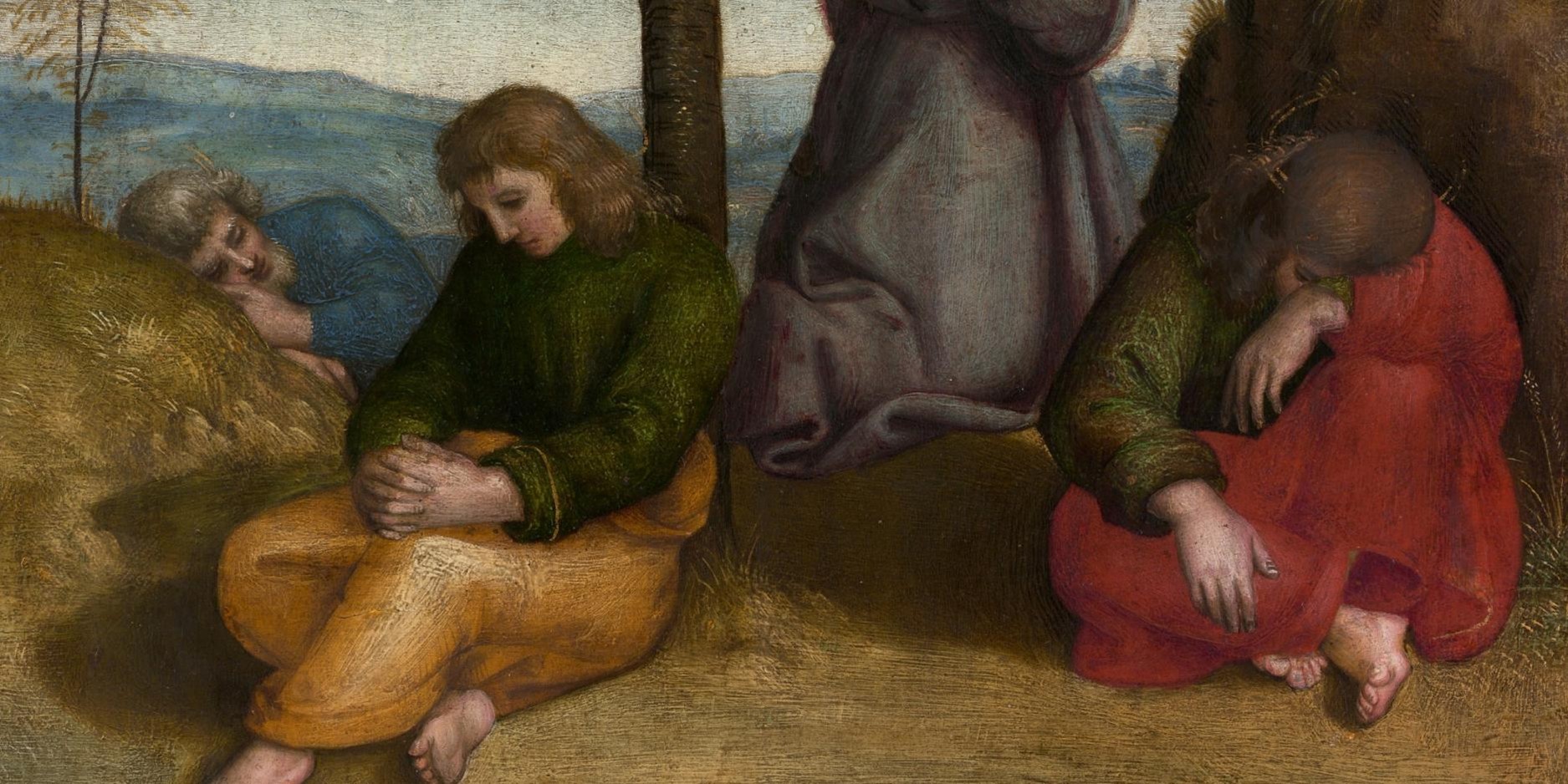
Image Credit: The Agony in the Garden by Raphael (Raffaello Sanzio or Santi). Italian, ca. 1504. The Metropolitan Museum of Art, New York. 32.130.1
Thank you for reading this article about Unanswered Prayer. Be sure to visit our Topics page to see more articles like this one about Unanswered Prayer.