Reformation Day, Its Significance and the Difference Between Protestants and Catholics
Reformation Day, Its Significance and the Difference Between Protestants and Catholics
October 31 is often called Reformation Day and is also known in some church celebrations as Reformation Sunday.
The late Dr. D. James Kennedy (1930-2007) noted that most Protestants have no more idea of what the Reformation was about than they could explain the Theory of Relativity.
They are members of a Protestant church by accident of birth, and they attend by mere habit.
“What Martin Luther did over 500 years ago, was to shatter centuries of dogma and tradition that had hidden the Gospel from the world.”
Many would have no more idea when they went into a church whether the preacher was preaching the Gospel or whether he was preaching the absolute antithesis to it.
This, no doubt, is because few churches today bother to celebrate or to teach about Reformation Day.
October 31, 1517 was the day in which an Augustinian monk, Martin Luther (1483-1536) nailed his 95 thesis to the church door in Wittenberg, Germany as an invitation to scholars in the church to debate those issues.
What Martin Luther did over 500 years ago, was to shatter centuries of dogma and tradition that had hidden the Gospel from the world.
Up until that time, the Gospel of grace had been overlaid with hundreds of years of accretion of human merit.
Everywhere men and women, by their own strivings and their own pious endeavors, sought to save themselves by good works.
Unfortunately some overzealous Protestants err in a major regard when they say Roman Catholicism teaches that one is justified or saved only by one’s good works.
Roman Catholicism has always taught that grace was necessary for one to come to a faith in God.
“The major debate back in the 16th century centered not on the sale of indulgences, the role of the papacy, penance, purgatory or Mary and saints, but on the article of how a person is justified.”
This misunderstanding no doubt came about from a letter from Martin Luther to his good friend Phillip Melanchthon (1497-1560) in which he attributed to the Catholic Church that most un-Catholic of doctrines regarding good works.
Luther wrote that Roman Catholicism teaches that, “Christ did not die for our sins, but each one should satisfy for them himself.”
These words were dreadful misrepresentation of Catholic doctrine then and they are a dreadful misrepresentation of Catholic doctrine today.
True, the Catholic Church insisted upon good works but she made it very clear that without the merits of Christ applied to our souls we could never be saved.
Nevertheless, the major debate back in the 16th century centered not on the sale of indulgences, the role of the papacy, penance, purgatory or Mary and saints, but on the article of how a person is justified.
All of these other items on which Roman Catholics and Protestants differ hinge on our respective view of justification and the role of works in our justification.
“All of these other items on which Roman Catholics and Protestants differ hinge on our respective view of justification and the role of works in our justification.”
To this day, this article of how one is justified continues as the focal point or the difference between our theologies.
This difference may be expressed in two formulas:
Roman Catholic theology says: Faith (by grace) + Works → Justification
Protestant theology replies: Faith (by grace) → Justification + Works
All other differences between Roman Catholicism and Protestantism are mere trifles. What is at stake here is the Gospel itself.
It answers the question raised by the Philippian jailer to Paul, “What must I do to be saved?” (Acts 16:30-31).
We are not engaged in a controversy over whether to sprinkle, dip or immerse but of salvation itself.
“Does God wait until we become just before He declares us just, or does He declare us just in His sight before we are just?”
It is the most important question we have as Christians. It is the problem of the justice of God. God is just and you and I are not.
David raised that question in antiquity when he asked, “If the Lord mark iniquities, who would stand?” (Ps. 130:3)
If God is not going to negotiate His justice, how are we saved? This was the debate of the 16th century between Luther and Rome and which continues today between Roman Catholicism and evangelical Protestantism.
Does God wait until we become just before He declares us just, or does He declare us just in His sight before we are just?
Luther’s formula was simul iustus et pecator, translated as “at the same time just and sinner.” That is we are justified by the work of Christ yet we still sin.
Rome heard in this formula a legal fiction. It would be unworthy, they say, of God and make Him a liar to declare a person just before a person is indeed just.
“God declares one just on the basis of the real work (the life and the death) of Christ. One is justified by faith, and that little word by, is the means through which one is justified as Christ both lived and died for us.”
Roman Catholicism agrees that justification occurs when God declares one to be just, but He does not do so, according to Rome, until one is indeed just.
The Reformers countered that it is not a legal fiction, but a legal diction. It is a legal diction by the One who does the justifying.
God declares one just on the basis of the real work (the life and the death) of Christ.
One is justified by faith, and that little word by, is the means through which one is justified as Christ both lived and died for us.
Roman Catholicism has two instrumental causes of justification, baptism and penance.
Protestantism has only one, faith that lays hold of the merit of Christ.
The critical questions then are: Is justification infused through the Roman sacraments of baptism and penance?
Or is justification imputed (transferred) to us by the righteousness of Christ?
A righteousness that is not in the believer, but a righteousness that is for the believer.
“Salvation for Protestants is by grace alone through Christ alone. It is unearned, undeserved and unmerited. It is received by a simple trust in Christ.”
Is it justification by infusion or by imputation? Reformation or Protestant theology holds to the latter.
Justification for Protestants means to have the perfect righteous of Jesus Christ clothing them as a white robe, as their sins were ALL imputed to Christ at Calvary.
Christ’s righteous life is also imputed to them who are thus made faultless to stand before the eyes of an all-holy God.
Salvation for Protestants is by grace alone through Christ alone. It is unearned, undeserved and unmerited. It is received by a simple trust in Christ.

Paul Tambrino, PhD, EdD is President Emeritus of the Iowa Valley Community College District, and former Academic Vice President of Warren County Community College. He has also taught accounting and theology at several colleges and seminaries, writes a weekly newspaper column, and is the author of Ask Augustine and Mariology: Past, Present and Future. He holds a Doctor of Philosophy in Theology from Trinity Seminary, and a Doctor of Education from Temple University. Paul was awarded the honorary rank of a three-star general at the US Air War College, Air War University-class of 1997 and he is a Paul Harris Fellow in Rotary International.
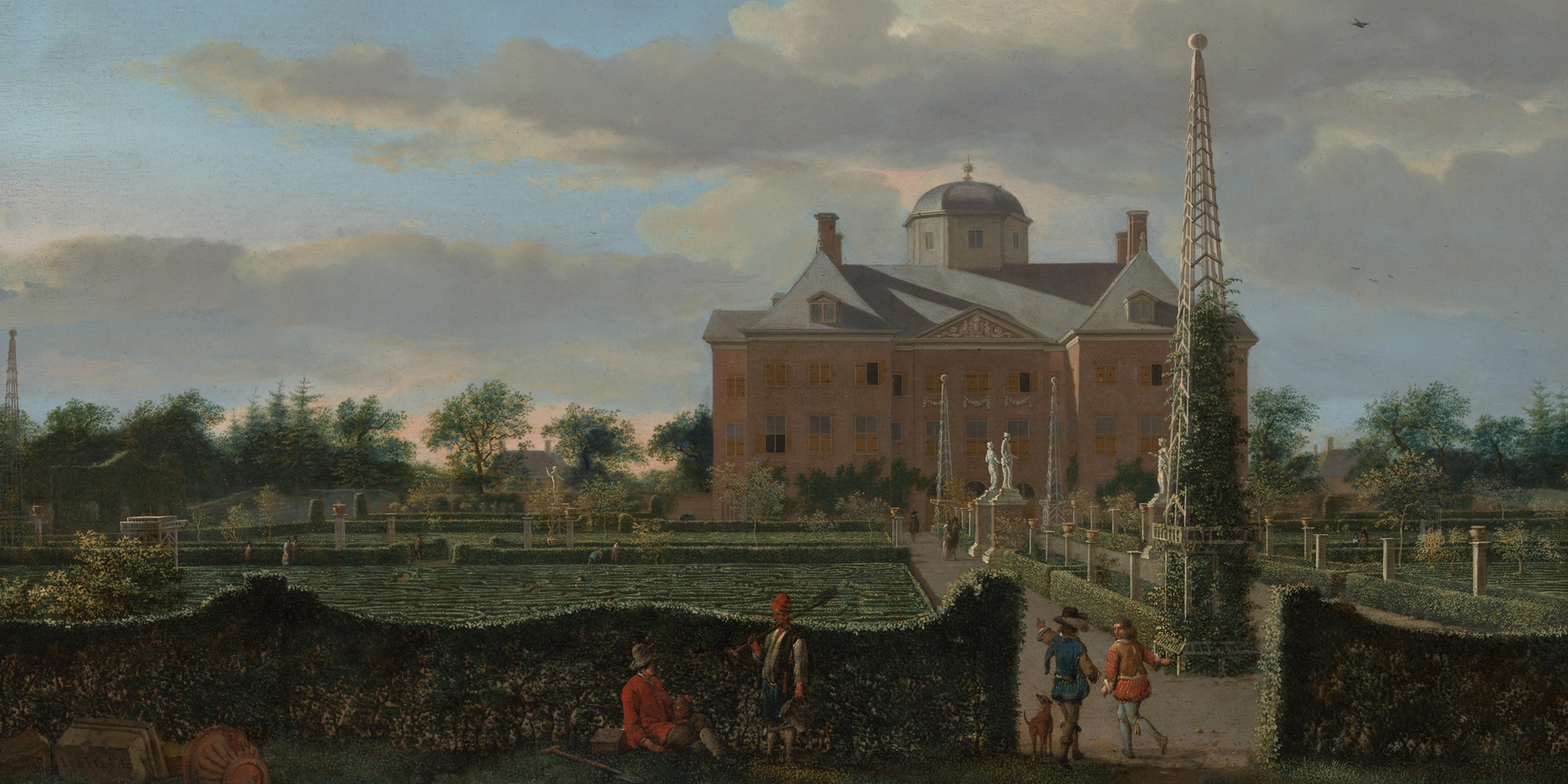
Image Credit: The Huis ten Bosch at The Hague and Its Formal Garden (View from the South) by Jan van der Heyden (Dutch, ca. 1668–70). The Metropolitan Museum of Art, New York. 64.65.2.
Thank you for reading this article about the Differences Between Catholics and Protestants.