What Is Young Earth Creationism?
What Is Young Earth Creationism? – Introduction
1) And God called the light Day, and the darkness he called Night. And the evening and the morning were the first day.
-Genesis 5:1 (KJV)
Taking God at his word. Young Earth Creationism accepts the Genesis creation account as literal (non-allegorical, non-metaphorical) and historic (not poetic or mythological).
Young Earth Creationists believe the earth is generally around 6,000 years old, that God created the universe in six literal 24-hour days and that the Genesis flood was global (non-local).
This view was widely accepted by Christians for millennia; however, its popularity has declined in the last 200 years due to higher criticism, theological liberalism, relativism, and evolutionary theory.
Many Christians now accept and allow for extra and non-biblical systems to be compatible with the biblical creation account. Examples are the gap theory, theistic evolution, instant creation, and evolutionary theory.
“Young Earth Creationists believe the earth is generally around 6,000 years old, that God created the universe in six literal 24-hour days and that the Genesis flood was global (non-local).”
Who Believes in It?
Most mainline denominations today take an ambiguous position regarding the age of the earth or allow for an open interpretation on the matter.
Thus, Young Earth Creationism is most prevalent among more conservative Christians and denominations.
While it is difficult to determine how many people hold to a young earth view, a 2017 Gallup poll suggested that 38% of Americans do, though actual numbers could be lower.
“Yom” and “Day”
Much of the young earth apologetic centers on Moses’ use of the Hebrew word “yom” (H3117) for “day” starting in Gen. 1:5.
He could have chosen other words that specified different lengths of time, but through the Holy Spirit’s guiding, he chose the word “day” because God intended to use the word.
He also preceded it with numbers, such as in “first day.” This along with the usage of “evening and morning” (Jewish days started at sunset) signified to readers that the days were to be accepted as literal 24-hour cycles.
It is incredibly difficult to read the creation account and not take it at face value.
Conclusion – In Defense of Young Earth Creationism
The question of the earth’s age is really about the authority of scripture. God means what he says, and his word says what it means.
If we take days to mean something it’s not, the rest of scripture falls apart as does the timeline of human history for creation in the Bible was not a pre-scientific attempt to explain the universe’s origin.
Rather, creation is the starting point for the history of the universe itself.
Genesis demythologized the ancient understandings of existence and is still a fully trustworthy account for modern man.
“As a direct revelation from God and the source of absolute truth, the Bible cannot err.”
As a direct revelation from God and the source of absolute truth, the Bible cannot err.
To be sure, the perspicuity (or clarity) of scripture does not mean that we know all things in the Bible without studying them nor that we can know all about God this side of heaven.
However, “the main thing is often the plain thing” as Alistair Begg always says and this is true of all major doctrines in scripture, especially creation.
We must remember he is God, we are not. Obedience and trust are essential.
Additional Information
Important Events
Moses writes The Pentateuch (c. 1445–1405 BC)
Ussher’s Chronology (1650)
Institute for Creation Research founded (1970)
Creation Ministries International founded (1977)
Answers in Genesis founded (1994)
Significant Books
The Annals of the World (1650)
New Geology (1923)
The Genesis Flood (1961)
The New Answers Book (2006)
Key Proponents
Calvin, John (1509-64)
Price, George McCready (1870-1963)
Ham, Ken (1951-)
Lombard, Peter (1100-60)
Luther, Martin (1483-1546)
Morris, Henry M. (1918-2006)
St. Basil the Great (329-79)
St. Bede the Venerable (672-735)
Ussher, James (1581-1656)
Whitcomb, John C. (1924-2020)

J.R. Waller, MBA is a Christian lay-teacher, author, and Founder of Every Reason to Believe. He holds an MBA from Rollins College, B.S. in Psychology from The University of Central Florida, Certificate in Christian Apologetics from Biola University, and Bible Knowledge Certificate from The Master’s Seminary Institute for Church Leadership. He is also a two-time Fellow (UCF, The James Madison Institute).
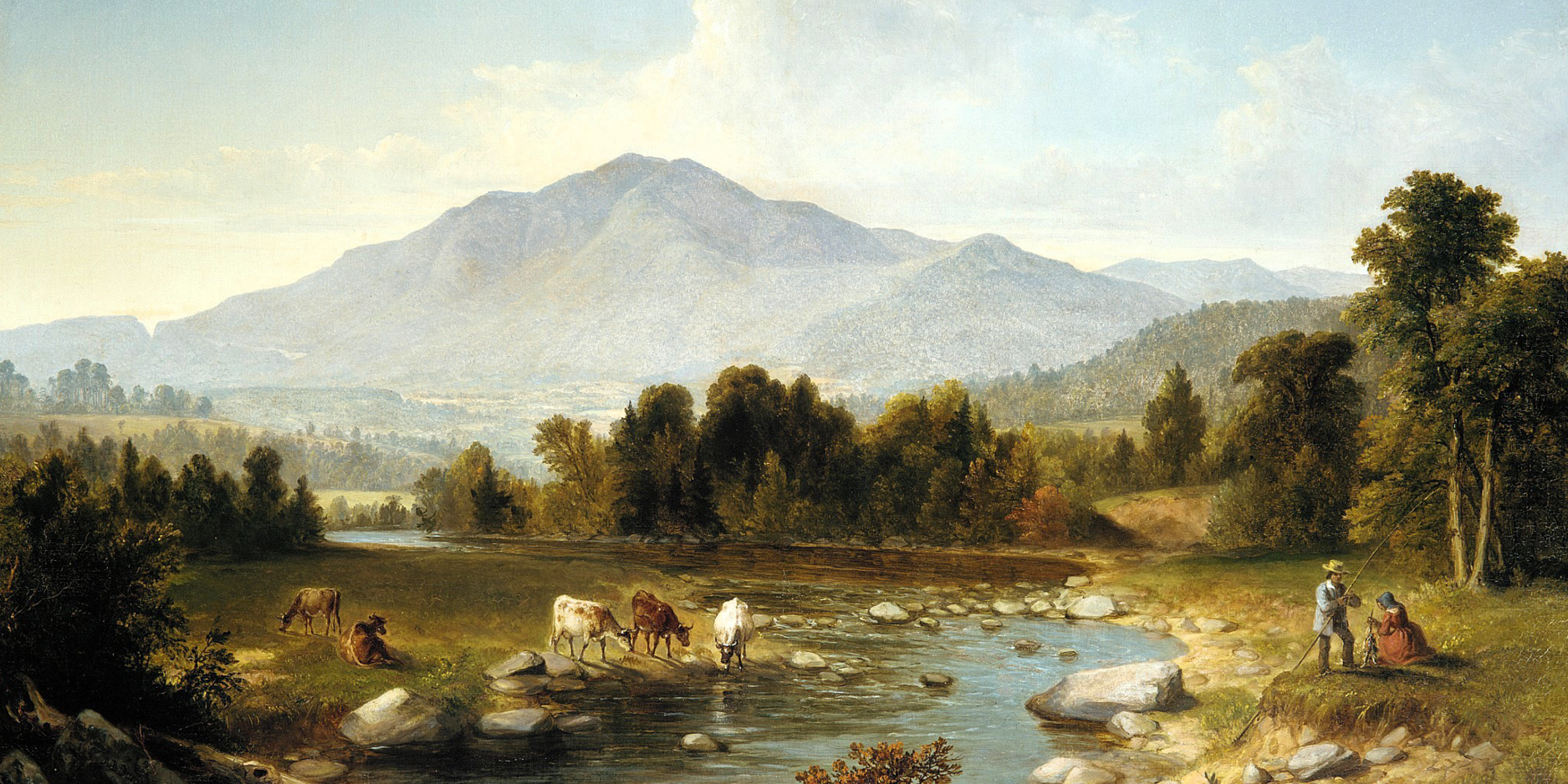
Image Credit: High Point: Shandaken Mountains by Asher Brown Durand (American, 1853). The Metropolitan Museum of Art, New York. 77.3.1.