
Top Books of 2025
Introduction
I read around 12 or so books in 2025, and below are my favorite 7 (note, these are my favorite books that I read in 2025, as such they’re not necessarily from 2025).
Many of my favorites this year centered around history, sociology, and the implications of technology on contemporary culture, the latter being a popular topic across many disciplines lately and for good reason.
I hope you enjoy the list and seek out a title or two for yourself. Now, before jumping into the top 7, here are some honorable mentions…
Skeptics Answered by D. James Kennedy – If you want a solid taste of Kennedy at the height of his apologetic powers, look no further.
Everything is Never Enough: Ecclesiastes’ Surprising Path to Resilient Happiness by Bobby Jamieson – A really popular title in 2025, it offers a fresh look at one of the Bible’s more challenging books and helps us realize how good God really is to us.
The Bookshop: A History of the American Bookstore by Evan Friss – Fun, telling little chapters about various aspects of publishing history, including the places and peddlers who have made the trade what it is today. An entertaining volume for book and art enthusiasts.
The Extinction of Experience: Being Human in a Disembodied World by Christine Rosen – An excellent overview of how mediating technologies are ruining everyday life.
2084 and the AI Revolution, Updated and Expanded Edition: How Artificial Intelligence Informs Our Future by John C. Lennox – A good overview about AI from a brilliant Christian mathematician that also contains some powerful creation apologetics.
The Anxious Generation: How the Great Rewiring of Childhood is Causing an Epidemic of Mental Illness by Jonathan Haidt – One of the most popular books of 2025, it provides a plethroa of evidence for how the world changed for the worse in 2012 as smartphones and social media became ubiquitous and began to erode the mental well-being of a generation.
The Top Books of 2025
#7 – Meet Me by the Fountain: An Inside History of the Mall by Alexandra Lange (2022, Bloomsbury Publishing)
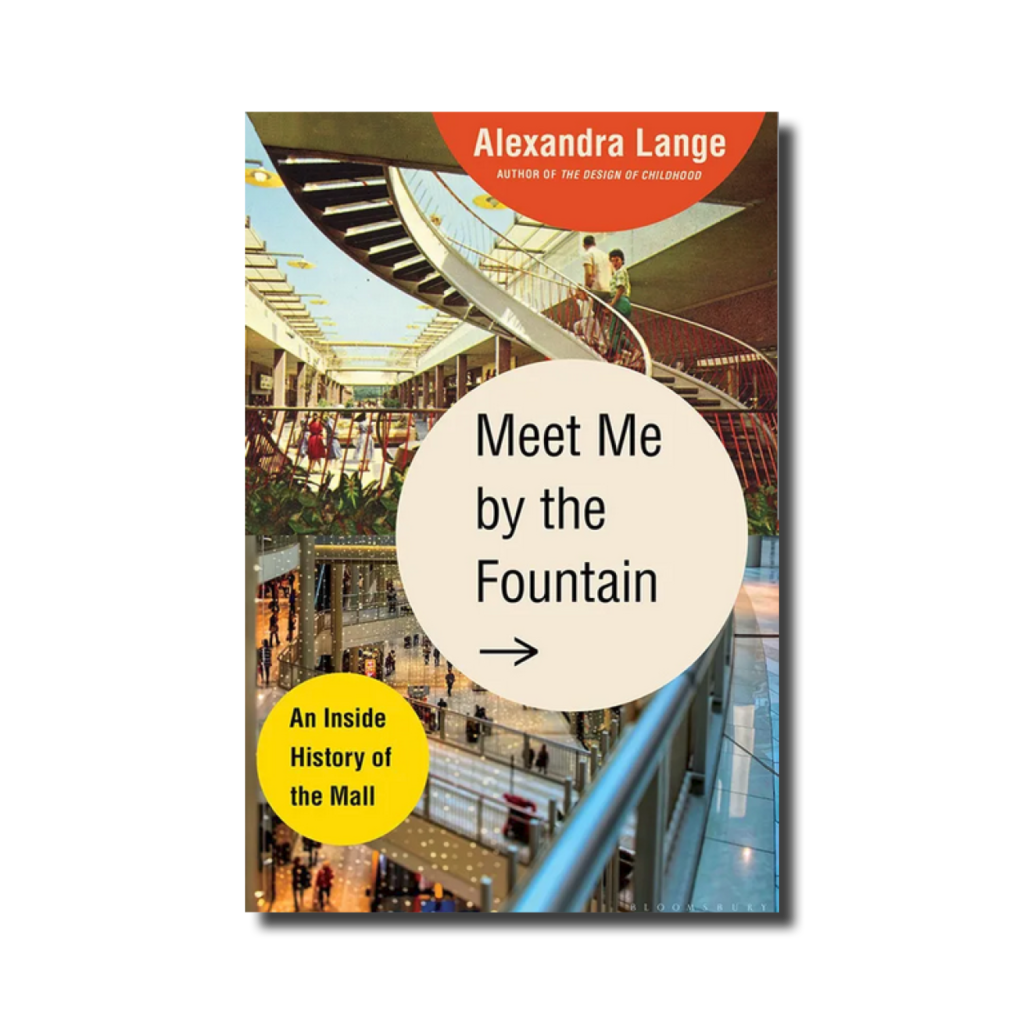
A more off the beaten path book for this list, but hey not everything can be heavy theology.
The American institution that is the shopping mall has always fascinated me, and Lange’s book is arguably the best single volume on its history.
While not without flaws, Lange certainly brings her own opinions on urban development to the forefront a bit too often, it’s nevertheless a neat, curious read and romp through post-WWII American retail and suburban history.
The book covers the history of the mall from its beginnings with the Galleria Vittorio Emanuele II in Milan to its growth in Victorian-era Paris to its first real American iteration at Southdale in Edina, Minnesota (America’s first enclosed mall.). What’s nice however, is its not just a strightforward linear narrative from the 1850s to today.
Readers also get a through helping of studies on the various forms of the mall, including the mall, festival marketplace, pedestrian mall, business improvement district, themed mall, as well as the different layouts of malls (L, T, X, E, and F shapes), and ownership structures.
“The American institution that is the shopping mall has always fascinated me, and Lange’s book is arguably the best single volume on its history.”
Much time is also spent on the major figures of mall development, particularly Victor David Gruen whom Lange, as well as various approaches to urban and suburban development.
And of course the mall’s place in the social consciousness of Americans is woven throughout the book.
As Lange points out, through the mall we learned to grow up, and malls also exhibit and chronicle our retail habits and priorities.
There are also some really entertaining forays into movies set in malls that offer up pure nostalia, zombie literature set in malls, malls (and mega malls!) around the world, and mallwave music (yes, it’s a thing!).
The decline of the mall gets a lot of treatment as well, and rightfully so as its been a hot button issue throguhout the 21st century due to the rise of eCommerce as a challanger to traditional retail.
However, while digital shopping has certainly had an effect on mall traffic, the real causes aren’t what one might initially expect.
For instance, one of the major culprits for the mall’s demise has actually been big box retail stores (Walmart, Costco, Sam’s Club, etc.) as well as changes in ownership structures (REITs) and direct to consumer marketing (which is often digital). Additionally, bargain hunting and places like T.J.Maxx haven’t helped either.
Moreover, not all malls are dead or dying, there are still some family-owned malls that are doing quite well, and affluent malls still attract buyers too.
Most malls today just need to brand themselves as destinations, plus you get the sense after reading the book that we probably had too many malls at one point.
Ultimatley, Meet Me by the Fountain is a celebrtion of the mall, a look into its history, and a meditation on its future. As Lange mentions and hopes to get across in the book, the mall “can still be Somewhere To Go.”
PS – Did you know K-Mart, Walmart and Target were all founded in the same year (1962)?
#6 – On the Providence of God by St. John Chrysostom (406/2015, St. Herman Press)
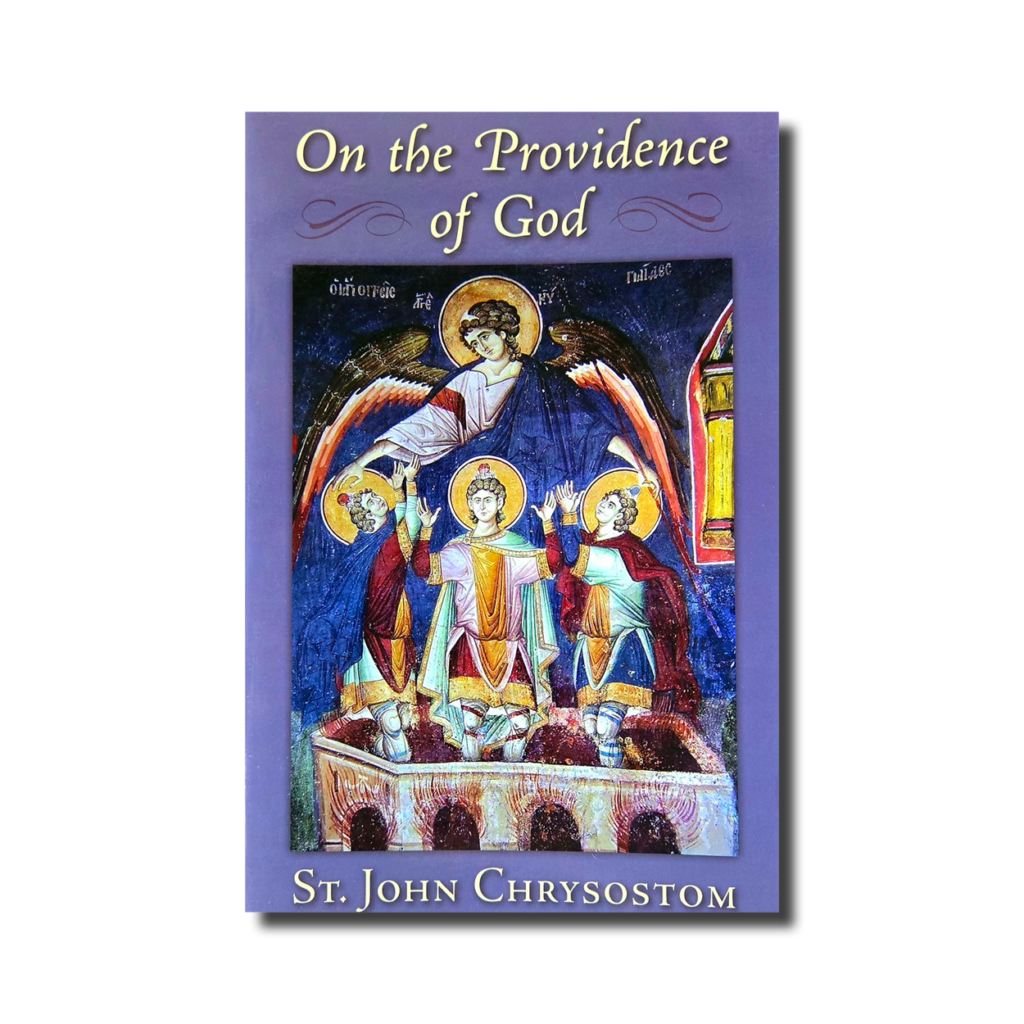
John Chrysostom was an Early Church Father during the fourth century AD. He was a famous pastor in Antioch who eventually became archbishop of Constantinople (modern-day Istanbul, Turkey).
Today, he is perhaps best remembered as a master of preaching and expositing the word. He was particularly adept at delivering words of encouragement to Christians, hance the surname that was given to him posthumously which means “golden-mouth.”
Chrysostom’s last major written work was his treatise On the Providence of God, written in 406-7 AD while he was in exile in Armenia.
The book deals with the important question: what do I do when I don’t understand why things happen to me?
Chrysostom approaches the subject of suffering in the booklet as a “doctor who prescribes words as medicine,” and in so doing he diagnoses those who continually try to find answers and causes for everything that happens to them as “sick.”
His remedy? A healthy dose of scripture and biblical explanations about how we can’t always know why things happen the way they do, especially because God’s ways are incomprehensible, limitless and unsearchable (Is. 55:8-9, Ps. 92:5, Rom. 11:33).
“On the Providence of God isn’t just an ‘old paths’ book, it’s an ‘original paths’ book that speaks to us just as clearly now as it did in the 400s.”
His point: don’t try to know more than God does, because it will ruin you mentally. It’s not healthy to try to figure it all out, nor can you.
Additionally, he points out that many times, before we pass judgement on something that happens to us or question it, we ought to wait to see what the final outcome will be.
Chrysostom and his followers were no strangers to persecution and hard times, and the “golden-mouth” preacher offers countless biblical nuggets of wisdom in On the Providence of God that are just as relevant, if not more so, now then they were more than 1,600 years ago.
On the Providence of God isn’t just an “old paths” book, it’s an “original paths” book that speaks to us just as clearly now as it did in the 400s. It’s essential reading on its subject.
Also, the authors inlude a detailed backstory about Chrysostom’s life that’s a nice addition and provides needed context to the work.
PS – There are a few typos in the book to keep an eye out for in the 2015 printing (the one I read), which was a bit disappointing. Nevertheless, the content is so good that it still made this list.
#5 – From Strength to Strength: Finding Success, Happiness, and Deep Purpose in the Second Half of Life by Arthur C. Brooks (2022, Penguin Random House)
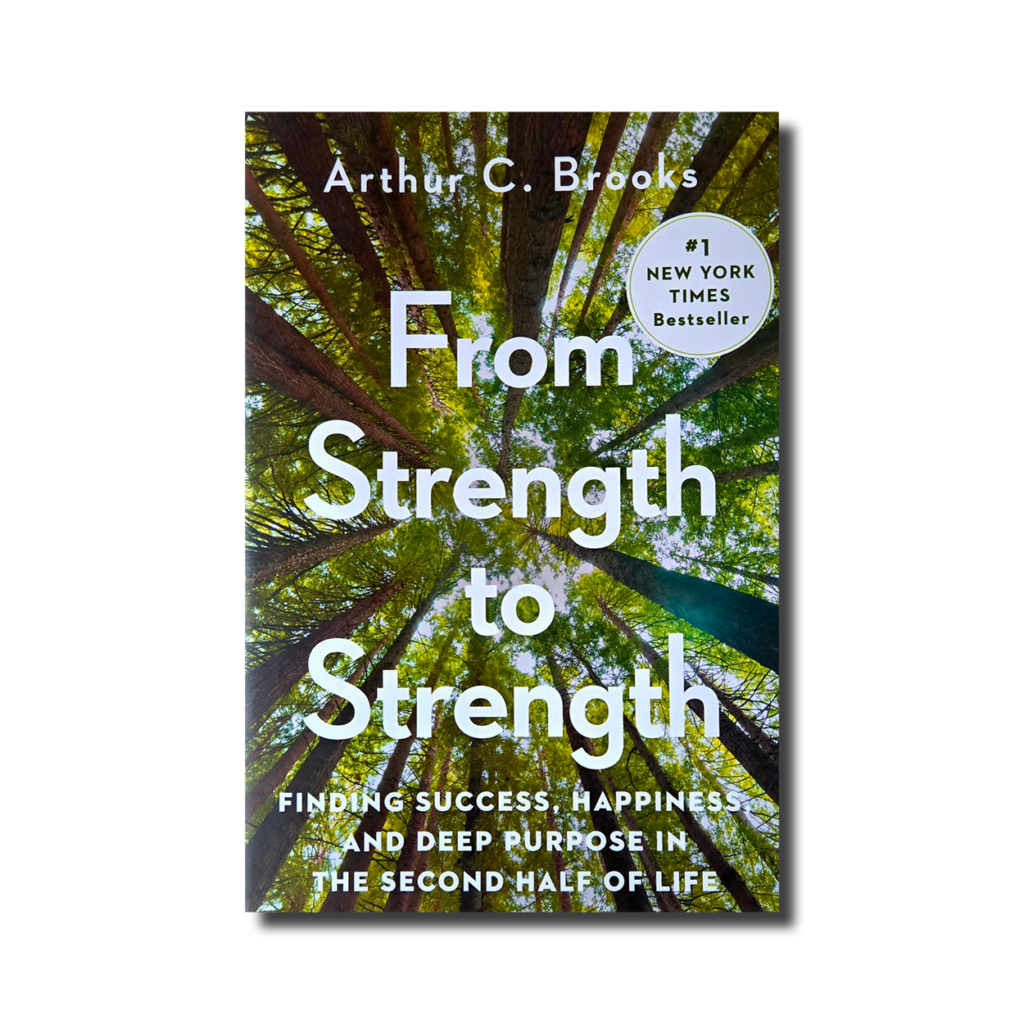
I discovered Arthur Brooks almost on a lark this year through Harvard Business School videos on YouTube.
Admittedly he seemed a little too “pop” for my taste (as in popular) which for me doesn’t always translate to new or thought-provoking content.
That being said, I liked his videos, especially the one about the importance of being bored, so I decided I’d give one of his books a try.
While From Strength to Strength isn’t the deepest book, it’s popular non-fiction done right – a breezy, easy read that still manages to cover a lot of ground about its topic, which is how to make your life count, find happiness and adjust your skills in the second half of life.
The book is still applicable no matter what stage of life you’re in by the way, and it might be even more important for younger readers as a way to warn and prevent them from developing harmful habits later in life.
When it comes to prioritizing the things that really matter in life, Brooks always has his priorities in the right place and his advice throughout the book truly has something of value for anyone and everyone.
“From Strength to Strength might have been my biggest surprise read of 2025, it’s quick, easy to read and offers a lot of great advice for navigating life, understanding and adapting to our limits as humans, and putting one’s priorities in the right order.”
The book is especially aimed at high-achievers and strivers. Brooks offers sympathy for the highly motivated and the doers which I appreciate.
He notes that often the most successful people by the world’s standards are the loneliest. They also often have a hard time adjusting to what appears to be (but isn’t necessarily) mental and physical decline in mid-life.
As Brooks explains, this is because high-achievers and a lot of people for that matter are usually addicted to success, with their lives overly defined by work.
For example, Brooks mentions how Winston Churchill and Abraham Lincoln, for as great as they were, were both extreme workaholics because, by their own admission, they really couldn’t handle everyday life because it made them depressed. They had to keep achieving, otherwise they couldn’t face life or be with themselves for too long.
Now, overcoming workaholism isn’t a new topic for a book by any means, however Brooks handles how our response should be to overwork and decline with clarity, and a matter-of-factness that is sadly far too rare.
Brooks tells it like it is; if you don’t develop better habits later in life to adapt to what your body needs, you’re asking for trouble. It reminds me of a quote from the film Sunset Boulevard, “There’s nothing tragic about being 50, not unless you try to be 25.”
With this context in mind, Brooks spends most of the book teaching about how to adapt to middle age and beyond. His major point is that earlier in life we’re often more successful at work that requires fluid intelligence while the second half of life we’re better at work that relies on crystallized intelligence.
The key is for people to commit to making the jump from their “fluid intelligence curve” to their “Crystallized intelligence curve” which for many isn’t easy.
“We need not be embarrassed about wanting to learn more about Christianity as we get older, because a lot of people actually do find their curiosity piqued by it in mid-life. The key is letting Christ take away your self-concept, something that isn’t easy but that is eternally worth it.”
From Strength to Strength might have been my biggest surprise read of 2025, it’s quick, easy to read and offers a lot of great advice for navigating life, understanding and adapting to our limits as humans, and putting one’s priorities in the right order.
There are some great real-world examples throughout the book, including psychological studies, anecdotes from Brooks’ own experiences, and conversations with people he’s coached and helped.
He does venture into world religions a bit too; he borrows some of their teachings to help people adapt to aging, in particular Buddhism and secular philosophy.
Nevertheless, Brooks is a devout Catholic and his ventures into the religions of the world are more so the curiosities of a Renaissance man instead of those of an ardent champion of global religious worldviews.
In fact, one of the best chapters is about how people in mid-life often want to explore religion and spirituality, which he turns into a nice apologetic about Christianity through the story of Nicodemus.
His point, which I loved, is that we need not be embarrassed about wanting to learn more about Christianity as we get older, because a lot of people actually do find their curiosity piqued by it in mid-life.
The key is letting Christ take away your self-concept, something that isn’t easy but that is eternally worth it.
From Strength to Strength is pop psychology that’s well worth your time, give it a look!
#4 – Progress and Religion: An Historical Inquiry by Christopher Dawson (1929/2001, Catholic University of America Press)
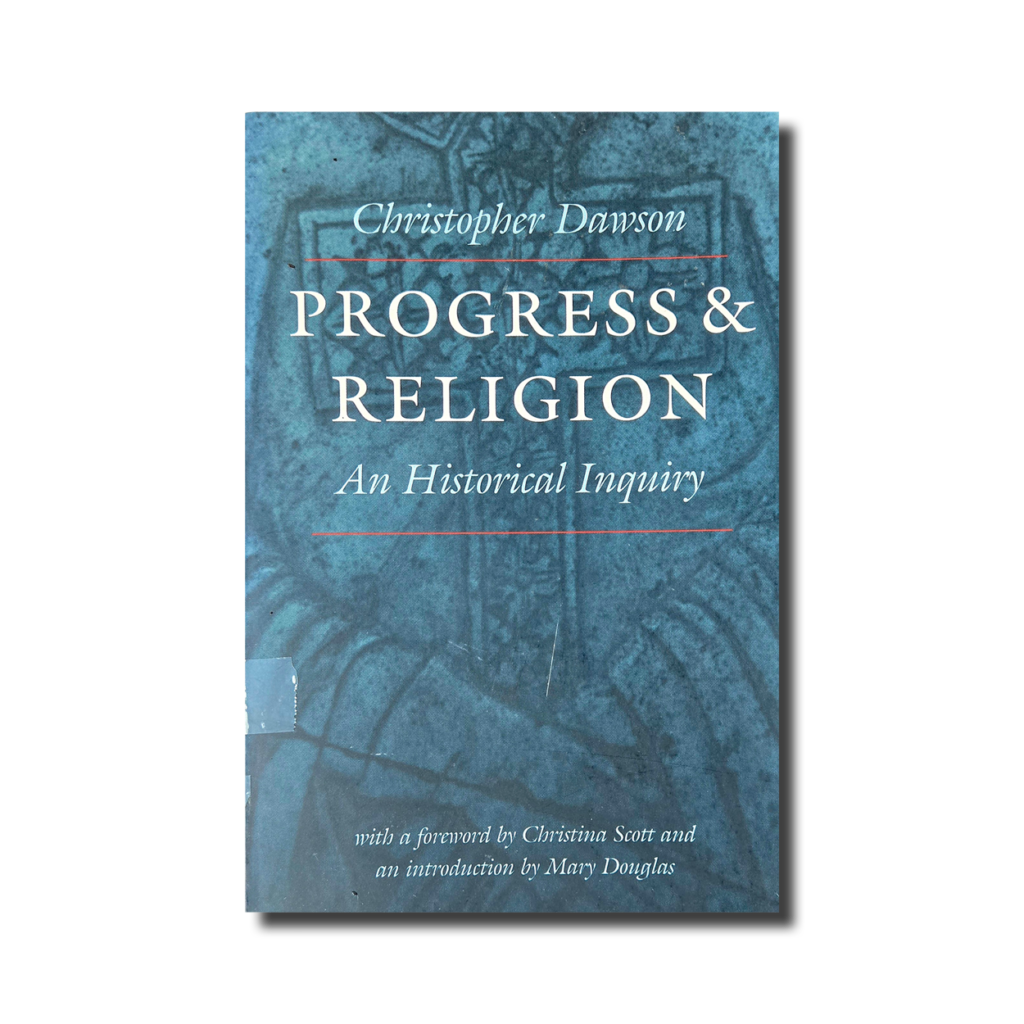
Written in 1929, Dawson’s classic and groundbreaking work on sociology proves that civilizations cannot survive let alone thrive without having religion (and especially Christianity) playing a major role in their cultures.
According to Dawson, if we don’t have a place we can go to where we can find sufficient answers about life, meaning and purpose, we will naturally transfer our energies for those answers into other things.
However, all other things outside of religion cannot satisfy the hard-wired need we each have for God.
The book is timely, and while I might not agree with Dawson’s recommendation to return everything to Medieval-era Christendom, his defense of religion as the primary catalyst for cultural improvement, sustainability and flourishing is well-articulated, highly informed and hard to argue against.
Another aspect of the book I enjoyed was his overview of religion’s history within societies, his insights on how “social revolution is an index of spiritual change,” and his examples about how a country can be very wealthy and advanced but be hollow inside.
In Progress and Religion Dawson shows how religion unifies a society through common thought, makes us look outside ourselves to objective standards that guide laws of right and wrong, makes us appreciate beauty and nature and cultivates standards, values and traditions.
If you’re looking for answers about the importance and relevance of religion and Christianity as they pertain to civilization, look no further than Progress & Religion.
PS – For some nice complimentary material check out the TV shows Civilisation: A Personal View by Kenneth Clark and How Should We Then Live? by Francis Schaeffer, and A Survey of Church History by W. Robert Godfrey.
#3 – Timothy Keller: His Spiritual and Intellectual Formation by Collin Hansen (Zondervan, 2024)
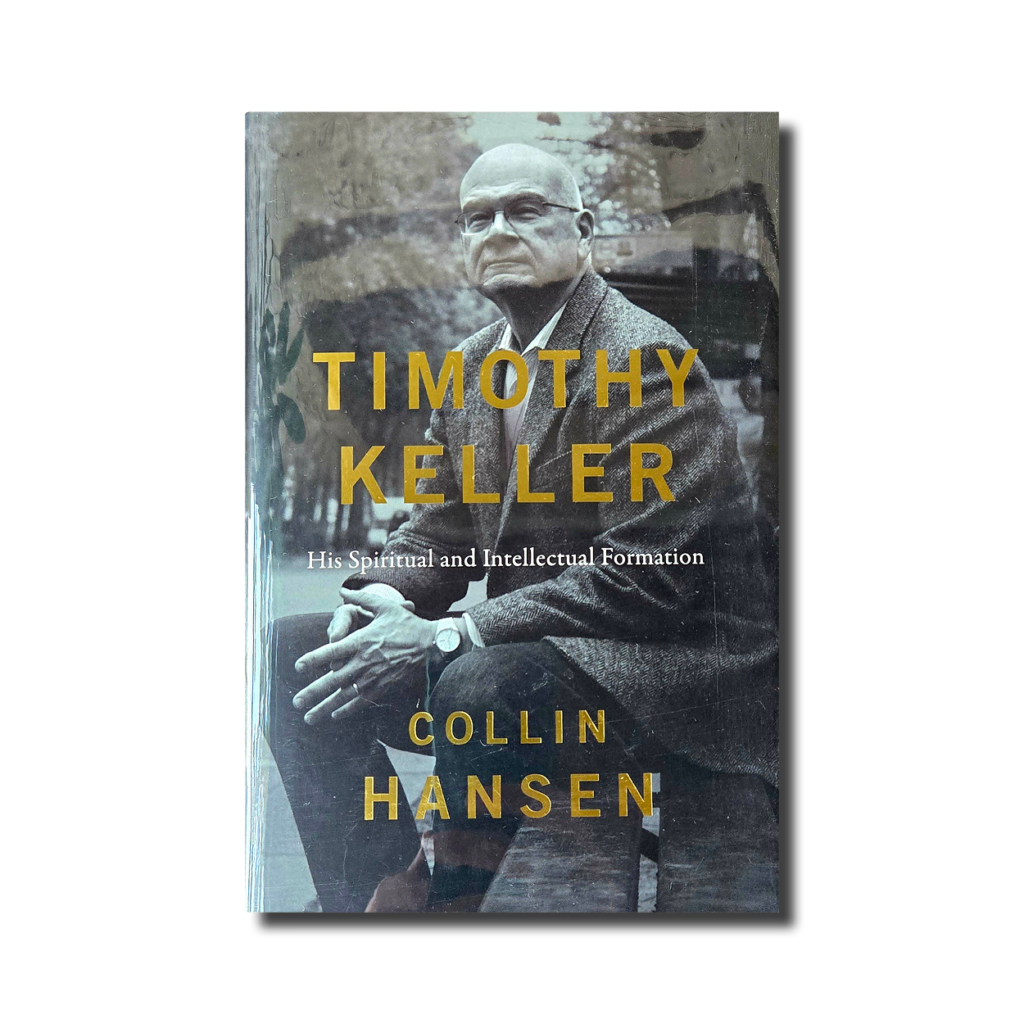
As strange as this might sound, before reading Collin Hansen’s excellent biography on Tim Keller, which was released right before Keller’s death in 2023, I never read or even watched anything by Keller (even though a lot of my friends had spoken highly of him). This was truly a blind buy for me, and one of the best in recent memory.
What struck me most about this book is the confluence of cross-denominational circumstances that shaped the life of one of the greatest American pastors of the late 20th and early 21st centuries.
The influences on Keller’s theology and style (a key part of the Formation aspect of the book’s title) were quite varied.
They include evangelical luminaries (Elisabeth Elliot, Francis Schaeffer, and Edmund Clowney), various Christian youth movements (InterVarsity, the Jesus Movement, and Young Life) and a host of influential seminaries and parachurch ministries (R.C. Sproul’s Ligonier Valley Study Center, the denominationally diverse Gordon-Conwell Seminary and the orthodox Westminster Theological Seminary among others).
“What struck me most about (Timothy Keller) is the confluence of cross-denominational circumstances that shaped the life of one of the greatest pastors of the late 20th and early 21st centuries.”
Despite the vast diversity of the people, places and currents that made Keller who he was, all of them were biblically faithful and generally conservative.
It comes as no surprise then that Keller’s theological style that would become his defining characteristic was a moderate approach that was firmly entrenched in a middle ground between legalism and free grace.
Keller was moderate without compromise, something that is next to impossible to pull off, but in Keller’s case, when one does, it’s incredibly appealing, and it could not have happened without his exposure to various sides of conservative biblical Christianity.
While he was no skeptic, Keller was almost a modern Erasmus, not really committing to either side of either Fundamentalism or Liberalism, yet remaining faithful to God’s Word and making Christianity winsome to the lost, something I find highly appealing and have modeled my own witness and approach to ministry after.
Keller’s journey is a fascinating one, but there are other things I loved in the book too, one of them being the many anecdotes about the who’s who of evangelicalism who influenced Keller.
For instance, I didn’t know that Francis Schaeffer warned R.C. Sproul that taking a L’Abri approach to Ligonier Valley Study Center could easily wear him out due to the demanding nature of constant hospitality.
“Keller was moderate without compromise, something that is next to impossible to pull off, but in Keller’s case, when one does, it’s incredibly appealing, and it could not have happened without his exposure to various sides of conservative biblical Christianity.”
Of course, Keller was one of the guests to the Sprouls’ Study Center. Ultimately though, Schaeffer was correct, which is why the Sprouls eventually moved to Orlando, Florida where they moved away from a hospitality based ministry to a media based one.
Another compelling insight is how Reformed Christianity blossomed around Pittsburgh, Pennsylvania in the late 60s and early 70s. Fred Rogers, R.C. Sproul, John H. Gerstner and more were all in that area during that time, and Keller and his wife Kathy were both from there.
It’s also downright fascinating that this era saw not just revival on the west coast with the Jesus Movement and Pentecostal growth but also on the east coast with a groundswell of Reformed revival as well. It was a neat time and the book really captures what it was like to be living during it.
Then there are the countless insights into New York City evangelism which are a primer on reaching urban audiences with the gospel which is what Keller would become most well known for.
Interesting asides like these decorate the book and make for compelling reading, yet Keller’s life is always front and center too.
Hansen provides a lot of candid glimpses into Keller’s life which provide vital lessons for aspiring ministry professionals.
For example, Keller’s first stint as a pastor in Hopewell, Virginia, despite growing the small church there over several years, was a struggle for him.
“One of the biggest takeaways from Keller’s life though, is how he found success relatively late in life.”
It’s not easy pastoring a rural congregation. As Collin states Keller learned at Hopewell to be “a pastor and not just a preacher.”
His first congregation needed to connect with him as a person and then the theology would come after.
This time in Keller’s life also serves as a warning against burnout. Keller was often a workaholic (he’d work for 80 hours a week a lot of times), however Hopewell really stretched him thin, especially with constant counseling. On average he visited or counseled around 15 people a week on top of all of his other responsibilities as pastor.
One of the biggest takeaways from Keller’s life though, is how he found success relatively late in life. He didn’t really get going as an author and “famous” pastor until he was in his 50s.
In fact, moving from Hopewell to New York City wasn’t even something he originally wanted to do. Yet, the rest, as they say, is history.
Keller’s time in New York City, from 1989 until his death in 2023, was undoubtedly the most fruitful period of his life.
Moreover, his aforementioned moderate approach set him up for success in urban church ministry, particularly to the affluent, intellectual and often single city crowd that he would really resonate with through Redeemer Presbyterian Church.
His time at Redeemer, which included the tumultuous events of 9/11, provided a template for urban church ministry that is still emulated to this day.
Overall, Collin Hansen’s biography of Tim Keller is outstanding, and it sent me down the rabbit hole of Keller books and theology.
The book is an engaging showcase of Keller’s “formation” that reminds readers how God uses many paths and influences to sanctify and grow his children into the sons and daughters he wants them to become.
PS – As a bonus, check out the book’s online supplemental material, it’s really neat!
#2 – Remaking the World: How 1776 Created the Post-Christian West by Andrew Wilson (2023, Crossway)
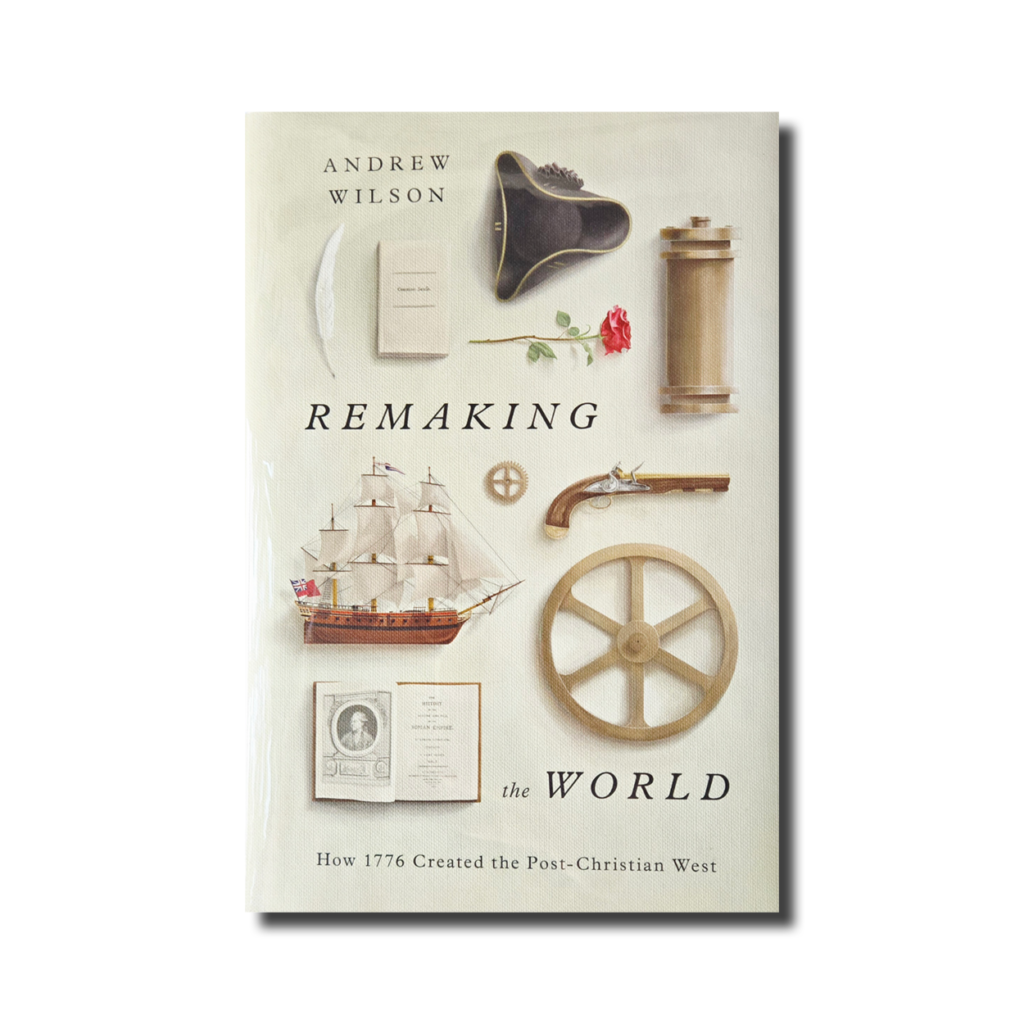
The provocative title of this book almost kept me from reading it, but I’m so glad I did.
Remaking the World affords readers a smorgasbord of fascinating information across all sorts of genres from history and religion to science and art and more.
Suffice to say, Wilson covers a ton of ground here, yet everything manages somehow to always point back to his main thesis: that we are WEIRDER–Western, Educated, Industrialized, Rich, Democratic, Ex-Christian, and Romantic–than our ancestors.
Wilson expands this concept throughout by explaining how we became WEIRDER, and the implications that being WEIRDER has had (and continues to have) on history and culture; one of his major points being that the culmination of WEIRDER is a post-Christian West.
When exactly did we start becoming WEIRDER? According to Wilson, around (you guessed it!) 1776.
Wilson argues that the proverbial year was a turning point for world history, and that a confluence of factors that year across multiple scholarly disciplines set the West on a post-Christian trajectory.
It’s not always easy to pull off a “this year changed the world” concept in a book, but it’s hard to go against Wilson’s claims.
“It’s not always easy to pull off a ‘this year changed the world’ concept in a book, but it’s hard to go against Wilson’s claims. The shear breadth of examples he provides…provide a compelling case for how 1776 was a paradigm shift for human thought and ingenuity that also marked the beginning of a post-Christian West.”
The shear breadth of examples he provides, by examining the changes in ideas and invention across academic disciplines, and geographic regions, provide a compelling case for how 1776 was a paradigm shift for human thought and ingenuity that also marked the beginning of a post-Christian West.
Not only does Wilson prove his points, but he does it in a Russian Doll like fashion, with each chapter unfurling lessons within lessons that demonstrate just how much the western world changed in 1776 and in the decades thereafter.
For instance, he writes about how man’s conception of himself gradually became therapeutic and psychological with a greater focus on the inner world, how ideas about human rights and equality began to dominate morality and government, how we changed how we approached history, and how new concepts such as expressive individualism, celebrity and industrialization came into reality.
Wilson also goes beyond 1776 to the present day, and offers very helpful answers to contemporary questions while showing that the questions themselves are really the legacy of ideas and movements that began 250 years ago.
These include why some countries are better off than others (due to geography, not race), how we can answers the question “have I done enough?”, what real freedom is and how the church can thrive in a post-Christian world.
As such, Remaking the World is equally informative (learning from the past) and instructive (how we can move forward).
For me, the most impactful aspect of the book was Wilson’s take on how Christianity in the West became a victim of its own success by being co-opted into nearly every aspect of secular life, thus causing Christianity to lose its real meaning and relevance to many people.
“If you want to know why the West is the way it is today, Remaking the World is an essential guide. If you love history, it’s a must read. And if you like big themes and big questions, this is your kind of book.”
And did I mention that this is also a history book filled with important anecdotes on influential philosophers, artists, scientists, industrialists, revolutionaries, statesmen, explorers, pastors and more?
What’s amazing is that Wilson presents all of the information in the book in a non-academic style, and while there is a lot to digest, a slow read makes it easy to take it all in.
If you want to know why the West is the way it is today, Remaking the World is an essential guide. If you love history, it’s a must read. And if you like big themes and big questions, this is your kind of book.
Oh and if you like video content…check out Wilson’s TGC talk about the book, it’s really fun and informative.
PS – Sid you know Benjamin Franklin edited the opening lines of the Declaration of Independence to“We hold these truths to be self-evident,” from the original “We hold these truths to be sacred and undeniable?”
#1 – Washington: The Indispensable Man by James Thomas Flexner (1974/1994, Back Bay Books)
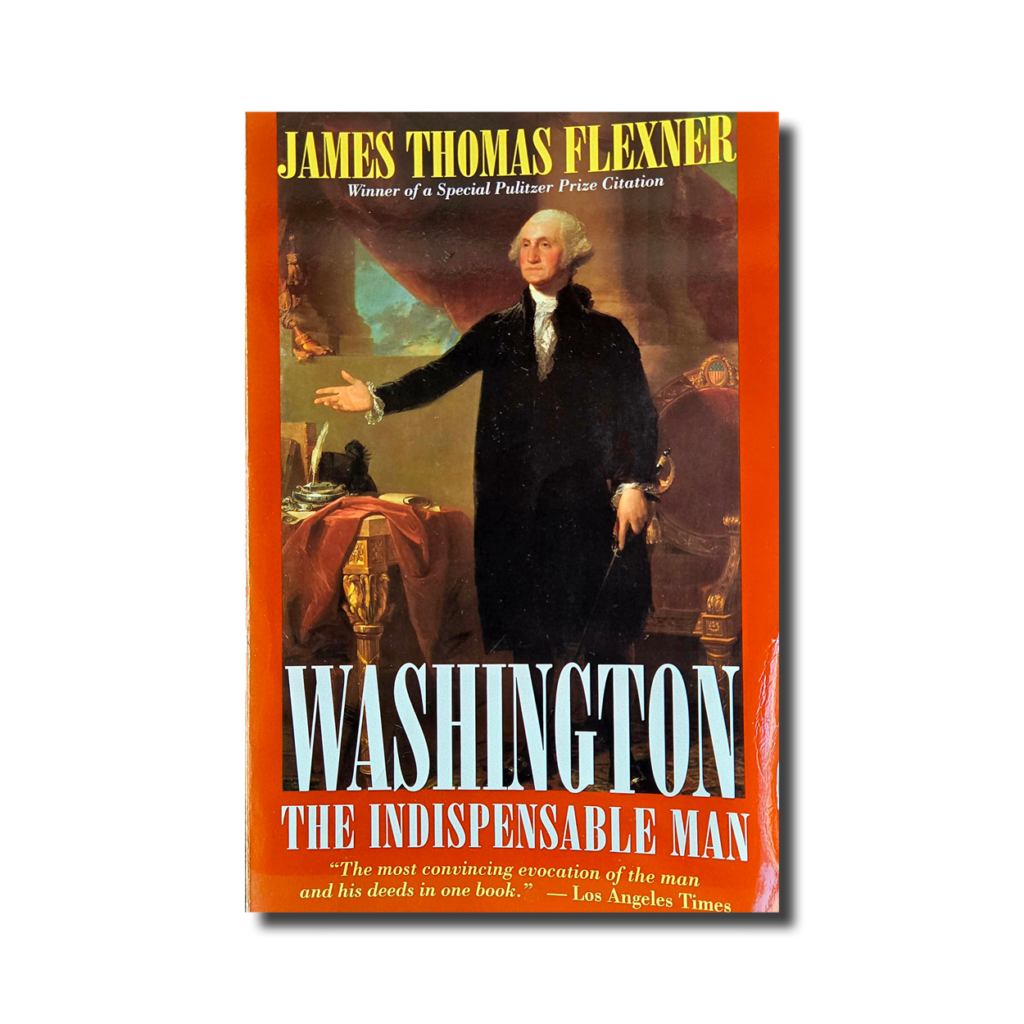
I finally dipped my toe deeper into American history this year with the abridged version of Flexner’s acclaimed four volume biography of America’s first president.
The work has been praised since the first volume was released in 1965, and it did not disappoint. It was so good in fact that I’m proud to call it my favorite book I read in 2025.
Naturally, the book covers Washington’s life, however it also gives ample time and attention to other major characters and events of Revolutionary-era America.
Flexner’s style, the best historical biography writing I’ve yet to encounter, ebbs and flows with ease between Washington and the major events of the time.
As such, after reading The Indispensable Man I walked away feeling like I could speak confidently not just about Washington, but about early American history as well.
In terms of Washington, Flexner gives a penetrating account of his social life, temperament, leadership qualities, outlook and much more.
We learn that Washington really was an upright man with high standards and that his knowledge of Indian tactics and the wilderness made him indispensable to the French and Indian War and eventually the Revolutionary War.
“Flexner’s style, the best historical biography writing I’ve yet to encounter, ebbs and flows with ease between Washington and the major events of world history at the time.”
We also get a close look at his tendency toward people-pleasing and his almost inability to move on from people even if they needed being moved on from. While he was no pushover he was almost too nice at times when it came to personal relationships.
Moreover, we learn about his quirks; he hated sitting for portraits, he was often restless with non-stop vitality and energy, and he had a very difficult relationship with his mom.
Ultimately, and most interesting above all else that Flexner teaches about Washington, is that by no real plan of his own, he was always an “indispensable man” for those around him and his country through a combination of being at the right place at the right time and by always being someone with just the right skill for what was needed at specific moments.
This is made all the more compelling because Washington was, objectively, rather unskilled in an overall sense at the many things that he found himself thrust into, especially warfare and administration.
Despite this, his popularity, especially among the common man, continued to rise through most of his life which also helped propel him to his indispensable status.
In the end, Washington really was an America hero; his life a vital example for those who espouse the belief that character is more important than skills when it comes to leadership.
“Ultimately, The Indispensable Man is an indispensable volume not just on America’s first president, but also on American history in general. The book also shows how the United States of America is just as unique today as it was 250 years ago.”
As if Washington weren’t compelling enough, Flexner’s details and history of Revolutionary America are fascinating, gripping and enlightening too.
Throughout the book one learns how the United States really shouldn’t have come into existence. The cards and deck were really stacked against the promising nation.
Yet, by shear will and some miracles, the Americans pulled it off, despite their rag tag army, disagreements among states, constant clashes of new political ideas and having to chart the unparalleled frontiers of an entirely new political and social system with no real precedent.
Moreover, even after the United States became independent, Washington’s time as President was no cake walk.
Things emerged that were never considered such as political parties and the libel of the press (which deeply affected Washington in particular).
Not to mention wrestling with how to handle fiscal and monetary policy, where to move the capital to, how to design the capital and how to handle the rest of the world (isolationism vs. active involvement).
Additionally, whether about Washington or the growing pains of young America, Flexner never leaves out the supporting cast.
He provides insights into John Adams’ jealousy of Washington, Hamilton and Jefferson’s constant and bitter animosity toward each other (which was really a clash of Federalists and the mercantile class vs. the old agrarian class), the British insistence on not taking us seriously enough despite being overwhelmingly stronger than us (Washington went through four British generals!), Benedict Arnold’s bizarre betrayal (a non-abridged version of that) and so much more.
The book also shows how the United States of America is just as unique today as it was 250 years ago.
The Indispensable Man is an indispensable volume not just on America’s first president, but also on American history in general.
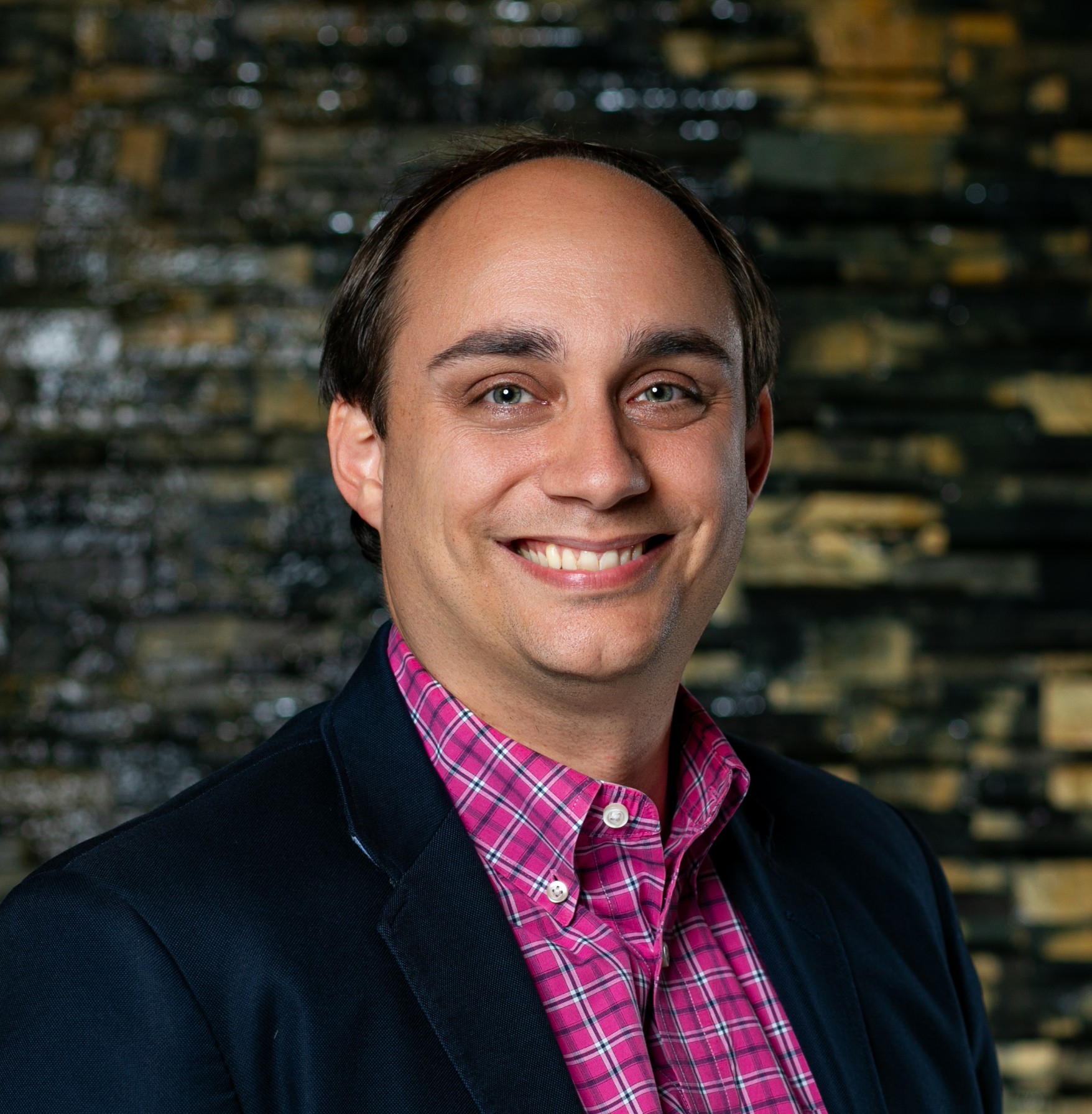
J.R. Waller, MBA is a Christian lay-teacher, author, and Founder of Every Reason to Believe. He holds an MBA from Rollins College, B.S. in Psychology from The University of Central Florida, Certificate in Christian Apologetics from Biola University, and Bible Knowledge Certificate from The Master’s Seminary Institute for Church Leadership. He is also a two-time Fellow (UCF, The James Madison Institute).